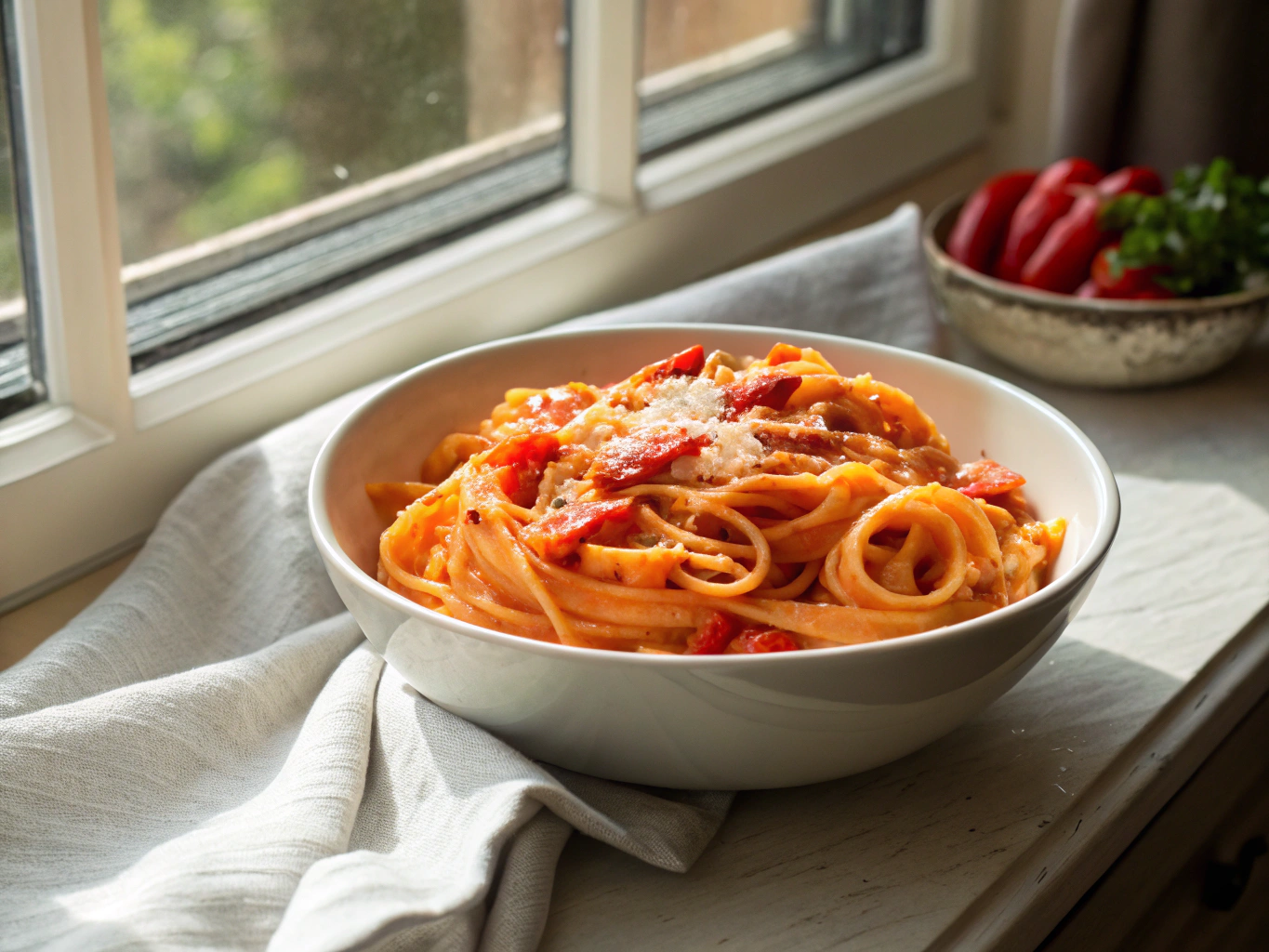
Let’s be real – pasta is one of those foods that just hits. No matter the mood , no matter the day, there’s something about a warm, creamy bowl that feels like a soft hoodie for your soul.
But then comes the guilt trip, right? “Carbs again?” “Where’s the protein?”
Here’s the plot twist: this roasted red pepper pasta isn’t just creamy – it’s packed with protein. And nope, we’re not talking dry, chalky “protein hacks.” We’re talking smooth, rich, feel-good pasta that actually supports your body instead of slowing it down.
This dish is for anyone who:
Craves comfort food but wants real nourishment.
Doesn’t want to cook a 12-step gourmet drama.
Loves bold flavors without the heavy sauce bloat.
You’ll blend up sweet roasted red peppers, sneak in Greek yogurt (or white beans – yep, really), toss it over protein pasta, and boom – creamy, satisfying, weeknight magic in a bowl.
Oh – and if you’ve got picky eaters, gym lovers, or anyone who thinks healthy means boring? This one shuts them up in the best way possible.
So if you’re looking for a recipe that feels indulgent and fuels you like a champ, keep reading. Your next go-to pasta night is officially sorted.
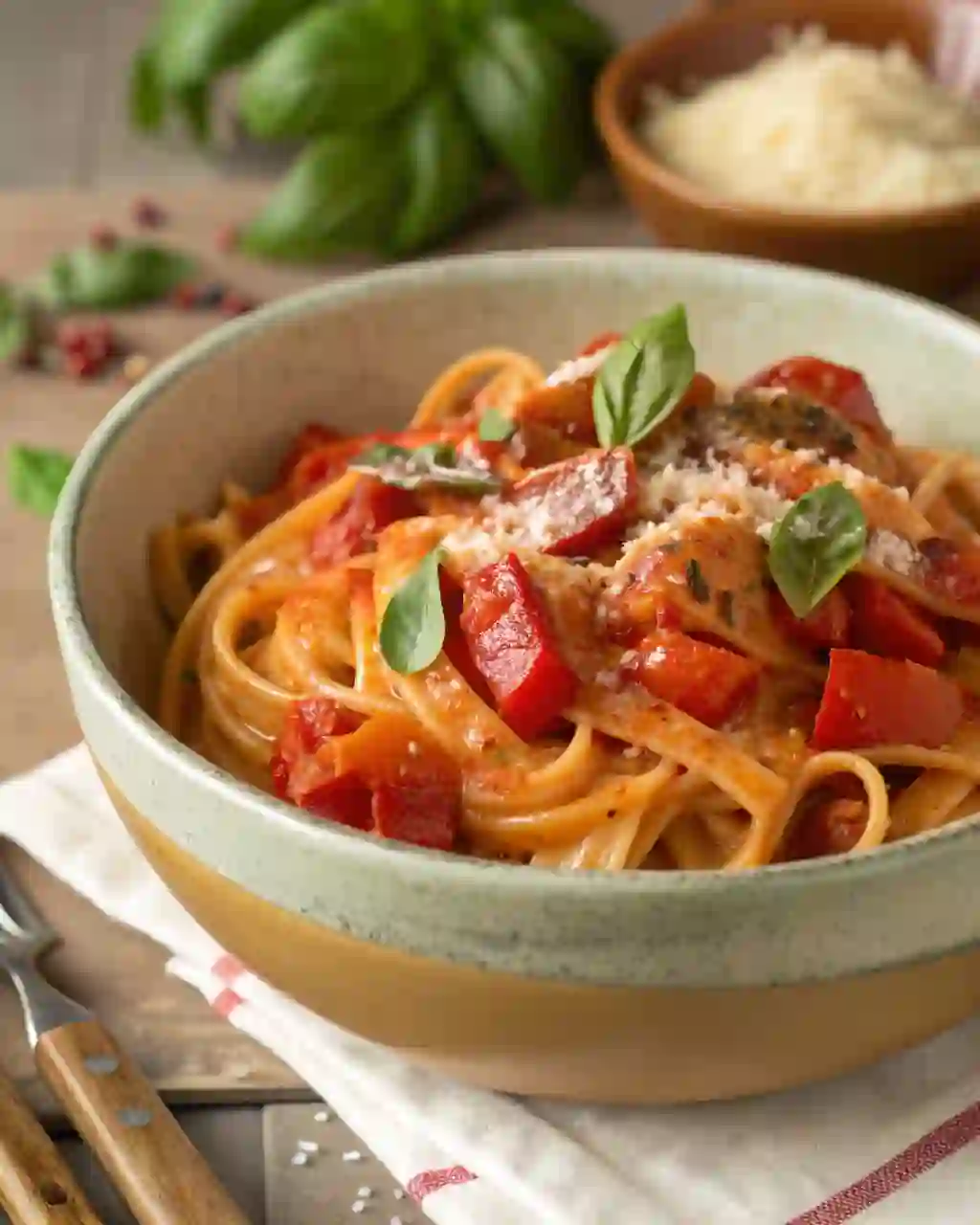

High-Protein Creamy Roasted Red Pepper Pasta
Ingredients
Equipment
Method
- Bring a large pot of salted water to a boil. Add the pasta and cook until al dente. Reserve ¼–½ cup of the pasta water, then drain.
- Heat olive oil in a pan over medium heat. Add the onion and cook until soft and lightly golden.
- Add the garlic and stir for about 30 seconds, just until fragrant. Remove from heat.
- Add roasted red peppers, onion, garlic, Greek yogurt or white beans, nutritional yeast, lemon juice, smoked paprika, salt, and pepper to a blender.
- Blend until smooth. Add a little reserved pasta water if the sauce feels too thick.
- Return the pasta to the pot. Pour the sauce over the pasta and toss gently to coat.
- Add more pasta water if needed until the sauce is creamy and glossy.
- Taste and adjust seasoning. Serve warm with herbs, parmesan, or chili flakes if desired.
Notes
- Pasta choice matters. Chickpea or lentil pasta keeps this meal more filling and protein-rich. Whole wheat also works if that’s what you have.
- Yogurt vs. beans. Greek yogurt gives a smoother, higher-protein sauce. White beans make it fully dairy-free while still creamy.
- Sauce too thick? Add a splash of reserved pasta water and stir gently until the sauce loosens.
- For meal prep. This pasta keeps well for up to 3 days in the fridge. Reheat slowly and add a little water to bring the sauce back to life.
- Make it mild or spicy. Skip chili flakes for kids, or add extra smoked paprika or chili for more heat.
Ingredients for High Protein Creamy Roasted Red Pepper Pasta
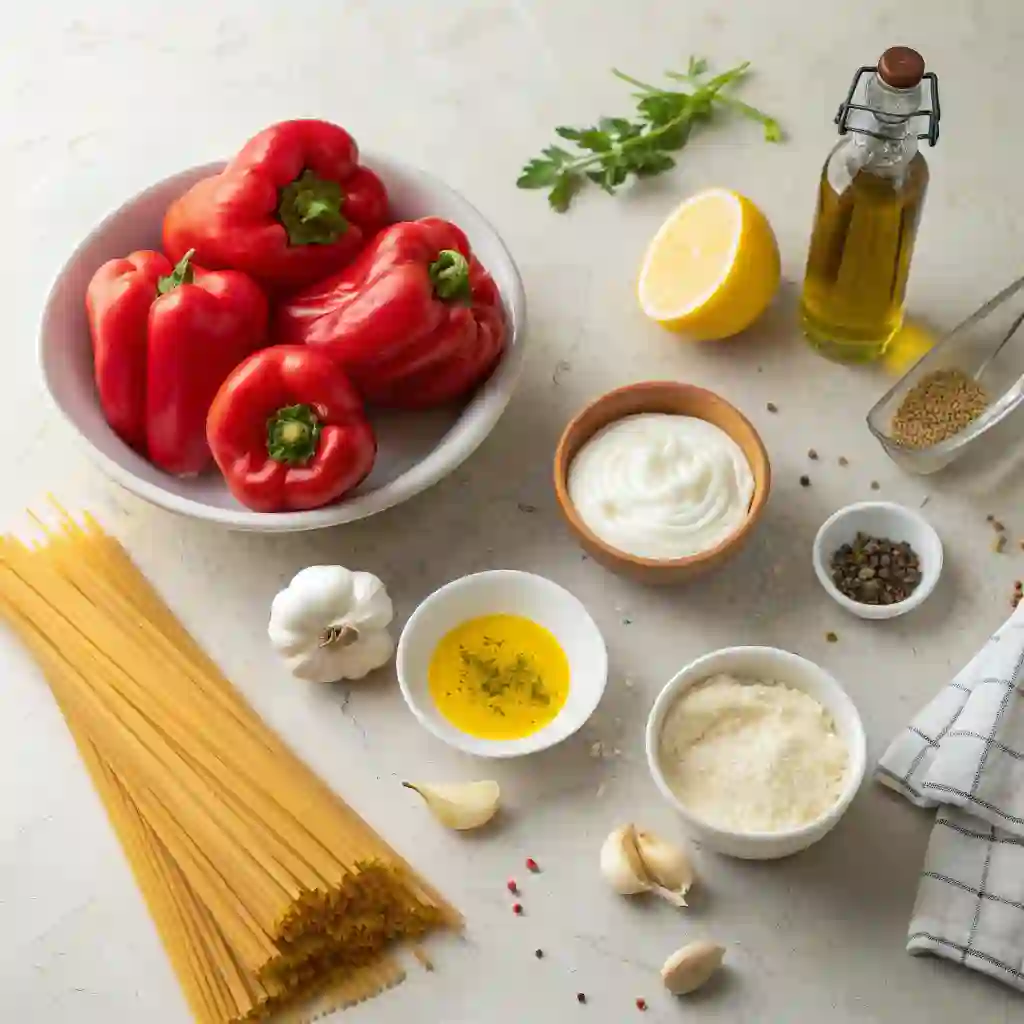
Nothing complicated here. If you cook even once in a while, you probably already have most of this. The goal isn’t to impress , it’s to make a bowl of pasta that feels comforting and actually keeps you full.
You’ll need some kind of high-protein pasta. Chickpea pasta works great, lentil pasta too, and even whole wheat does the job if that’s what you like. About 8 ounces (225g) is perfect.
For the sauce, grab two roasted red peppers. Jarred ones are totally fine – honestly, they’re what most people use. If you roasted your own, great. If not, no stress.
Add a bit of onion (nothing crazy, just enough for flavor). plus a couple of garlic cloves. Garlic does most of the heavy lifting anyway.
You’ll also need olive oil, salt, and black pepper. Basic, reliable, no drama.
Now for the part that makes this pasta different.
To get that creamy texture without drowning everything in cream, you’ll use either:
Greek yogurt , about half a cup , if you want extra protein and a smooth finish
or
White beans , around three-quarters of a cup , if you prefer dairy-free but still creamy
Both work. Pick what fits your life.
To boost flavor, add nutritional yeast for that subtle cheesy taste, a squeeze of lemon juice to keep things fresh, and a little smoked paprika for warmth. If you like spice, throw in a pinch of chili flakes – optional, always.
For serving, keep it simple. Fresh herbs if you have them, a bit of parmesan if you want, maybe some seeds or nuts for crunch. Or don’t. The pasta stands on its own.
Can you use jarred roasted red peppers?
Yes. And you should never feel bad about it. They save time, they taste good, and they make this recipe realistic for a normal day. Rinse them, blend them, move on.
How This Pasta Comes Together
So yeah… start with the pasta. Water, salt, pasta in. That’s it. Let it cook until it still feels alive when you bite it. If it goes soft, it’s done for. Before you drain it, just grab a bit of the water – not because the recipe says so, but because you might need it later. Sometimes you do, sometimes you don’t.
While the pasta’s doing its thing, put a pan on the stove. Add a little olive oil. Onion goes in. Leave it alone for a minute. No stirring every two seconds. When it starts to smell sweeter and looks softer, that’s your cue. Add the garlic, give it a quick stir, and stop. Seriously. Garlic burns fast and gets bitter, and no one wants that.
Now everything comes together. Dump the roasted peppers into the blender. Add the onion and garlic. Yogurt or beans , whatever you chose. The rest goes in too. Blend it. Stop. Look at it. If it feels thick and kind of stubborn, add a splash of that pasta water and blend again. Don’t chase perfection here. You’re just aiming for “yeah, that looks good.”
Taste it. Not a polite taste – a real one. If it’s flat, add salt. If it feels heavy, lemon helps. Fix it the way you would if this was just for you.
Put the pasta back in the pot. Pour the sauce on top. Mix it gently. If it starts clumping or tightening, add a bit more pasta water. Little by little. You’ll feel when it’s right.
And that’s honestly it. No finishing trick. No dramatic last step.
Eat it warm. Add herbs if you have them. Cheese if you feel like it. Or don’t add anything and eat straight from the pot. Happens more than people admit.
No blender?
You’ll manage. Food processor, hand blender, or just patience. It doesn’t need to be perfectly smooth to taste right.
Tips That Actually Make a Difference
This is the part people usually skip. And honestly, that’s where they miss out. Not because the recipe won’t work – it will – but because these small things are what turn it from “yeah, that was fine” into “okay… I’m making this again.”
First thing: don’t rush the sauce. When you blend it, stop once or twice and just look at it. Sometimes it looks creamy but eats heavy. That’s when a little pasta water helps. Not a lot. Just enough to loosen it without washing out the flavor. If you add too much, the sauce loses its personality.
Another thing – temperature matters. If you’re using Greek yogurt, don’t blend it straight from the fridge with hot ingredients. It can split. Let things cool for a minute. Not fully – just enough so everything plays nice together.
Taste more than once. And not back-to-back. Taste, pause, taste again. Your tongue catches things differently after a second. If something feels “meh,” it’s usually salt or acid. Lemon fixes more problems than people think.
Protein-wise, if you really want this to keep you full, don’t be shy with the pasta choice. Chickpea or lentil pasta changes the whole meal. Same bowl, different energy afterward. You’ll feel it.
And lastly – don’t overthink toppings. This isn’t a salad bar moment. One or two things max. Too much stuff on top just hides the sauce you worked for.
Can I make it thicker or looser?
Yeah. Thicker means less pasta water, looser means more. That’s literally it. No tricks. You control the texture.
Variations You Can Actually Live With
This is one of those recipes that doesn’t freak out if you change things. You can bend it a bit and it’ll still hold together. Honestly that’s part of why it works.
If you want it fully vegan
Skip the Greek yogurt and go with the white beans. That’s it. No complicated swaps. The beans blend into the sauce and give it that creamy body without tasting “bean-y” If it feels a little flat, add more lemon or nutritional yeast. Vegan sauces usually just need a bit more brightness.
If you want more protein (like, really more)
Use chickpea or lentil pasta – that already gets you far. Then add something on top instead of inside the sauce. Grilled tofu, tempeh, even leftover roasted chickpeas work better than forcing protein into the sauce and ruining the texture. Sometimes separation is the smarter move.
If you like heat
Red pepper flakes are fine, but smoked chili powder or a bit of harissa hits deeper. Add it slowly. You want warmth in the background, not a sauce that yells at you.
If you’re cooking for picky people
Keep the sauce smooth and don’t talk too much about what’s in it. Seriously. Most people love roasted red pepper flavor – they just panic when they hear “beans” or “nutritional yeast.” Let them eat first. Explanations can come later.
If you’re thinking meal-prep
This pasta keeps better than you’d expect. Store the sauce and pasta together, but reheat gently. Add a splash of water when warming it up , the sauce tightens in the fridge, and that’s normal. It loosens back up.
Can I add vegetables?
Yes, but don’t crowd it. Spinach, zucchini, or mushrooms work. Add them after the sauce, not before. This dish is about the sauce , vegetables should support it, not compete with it.
Questions People Usually Ask (And Mean It)
Is this pasta actually filling?
Yeah. More than you’d expect. Between the protein pasta and the sauce itself, it doesn’t leave you hungry an hour later. It’s not one of those meals that tastes good but disappears the second you stand up.
Does it taste like yogurt or beans?
No. And that’s the point. Once everything is blended with the roasted peppers, those flavors disappear into the background. What you taste is smoky, slightly sweet, creamy red pepper , not “health food.”
Can I make the sauce ahead of time?
You can, and it actually helps on busy days. Make the sauce, keep it in the fridge, and cook fresh pasta when you’re ready. Just know the sauce thickens as it sits. That’s normal. A little water fixes it.
What if my sauce tastes flat?
That usually means one thing: it needs salt or acid. Add a pinch of salt first. If that doesn’t wake it up, add a small squeeze of lemon. Don’t keep adding random spices – that just muddies things.
Can kids eat this?
Most do, especially if you keep it mild. Skip the chili flakes and don’t oversell what’s inside. To them, it’s just “creamy red pasta.” And that’s enough.
Do leftovers hold up?
Yes, but gently. Reheat slowly and add a splash of water. If you blast it in the microwave without moisture, the sauce tightens and gets weird. Low heat, small fix.
Final Thoughts
This pasta isn’t trying to be impressive. It’s not pretending to be fancy or revolutionary. It just does what a good meal should do , it tastes good it fills you up and it doesn’t leave you feeling heavy or disappointed afterward.
It’s the kind of dish you make once, then catch yourself thinking about again a few days later. Not because it was complicated, but because it worked. Creamy without being too much. Comforting without knocking you out. And honestly, the fact that it happens to be high in protein feels like a bonus, not the whole point.
If you’re someone who loves pasta but wants meals that actually support your day – workouts, workdays, long evenings – this one fits in easily. No stress, no guilt, no “healthy food” aftertaste.
Make it your way. Adjust it. Ignore parts of the recipe next time if you feel like it. That’s usually how the best recipes stick around.
And if you end up eating a bowl straight from the pot the first time you make it… you’re definitely not the only one.
Leave a Reply