
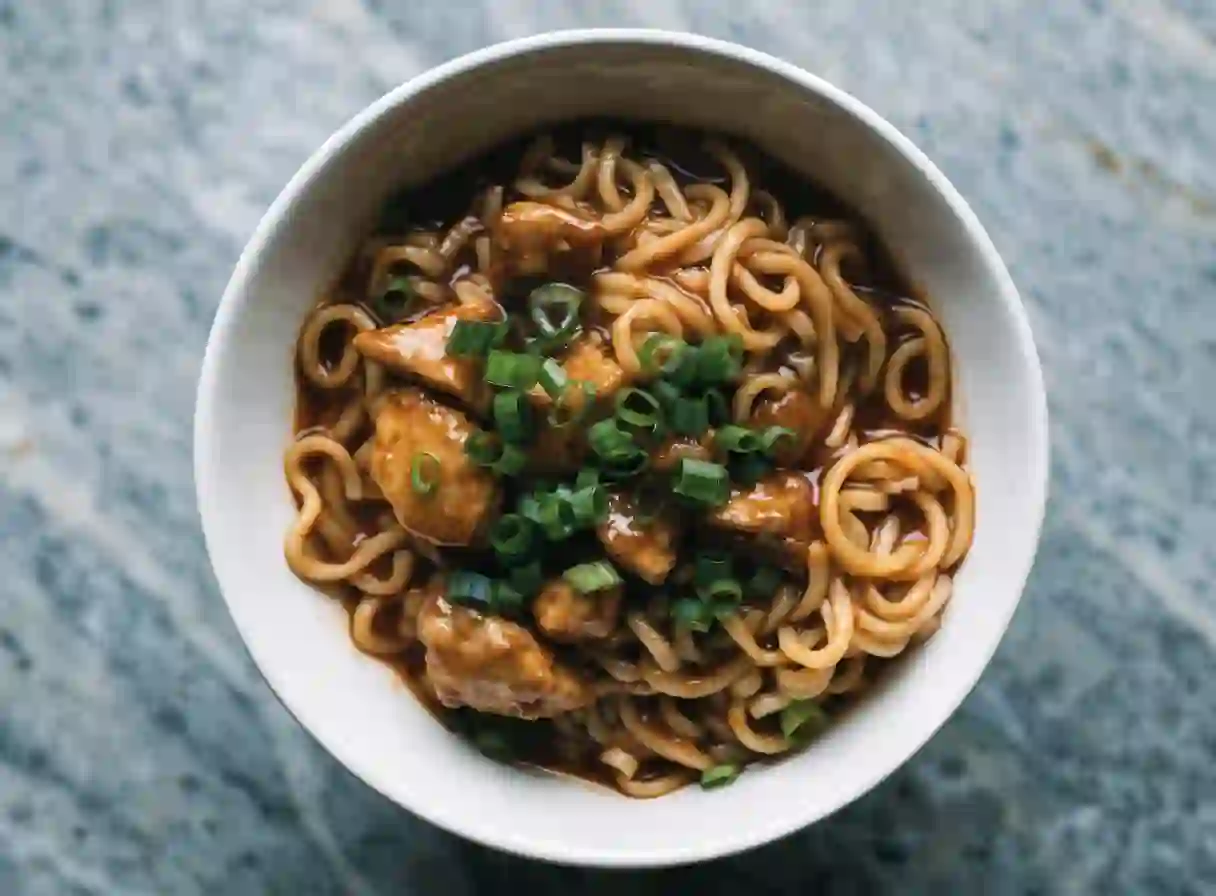
Let’s be honest. Instant ramen is great until it isn’t. You eat it, it hits the spot, and then an hour later you’re opening the fridge like it personally betrayed you.
That’s why I started messing with this easy saucy ramen noodles situation in the first place.
I didn’t want fancy. I didn’t want “clean eating.” I just wanted a bowl that actually held me over. Something glossy and salty and garlicky, but with enough protein in it that I wasn’t hunting for cereal later.
So this version fixes that.
It’s still fast. Still cheap. Still the same noodles you’ve probably had in your cabinet since who knows when. The only difference is we’re throwing in real protein and building a sauce that actually sticks. Not that watery stuff that slides to the bottom and leaves you with naked noodles at the end. I hate that.
And yes, it’s still like 10 minutes. Maybe 15 if you’re moving slow.
What makes this one different?
Honestly, it’s just smarter about balance.
25 to 40 grams of protein depending on what you toss in. Chicken works. Shrimp works. Tofu if that’s your thing. Even two eggs and you’re in good shape. The carbs are still there, obviously, it’s ramen, but pairing them with actual protein makes it feel like a real meal instead of a snack pretending to be dinner.
Also the sauce. That’s the part people mess up. They either drown the noodles or they under-season and call it healthy. Neither is good.
Most “high protein ramen” I’ve tried tastes like meal prep from a plastic container. Dry chicken chunks sitting on top like an afterthought. This isn’t that. The protein gets coated. Everything tastes connected.
If you’re wondering how to actually make easy saucy ramen noodles high protein, it’s not complicated. Cook 4 to 6 ounces of whatever protein you’re using. Stir it into the noodles while they’re hot. Use a splash of the starchy noodle water when you mix in the sauce so it turns glossy instead of sticky. That’s it. No weird powders. No protein hacks.
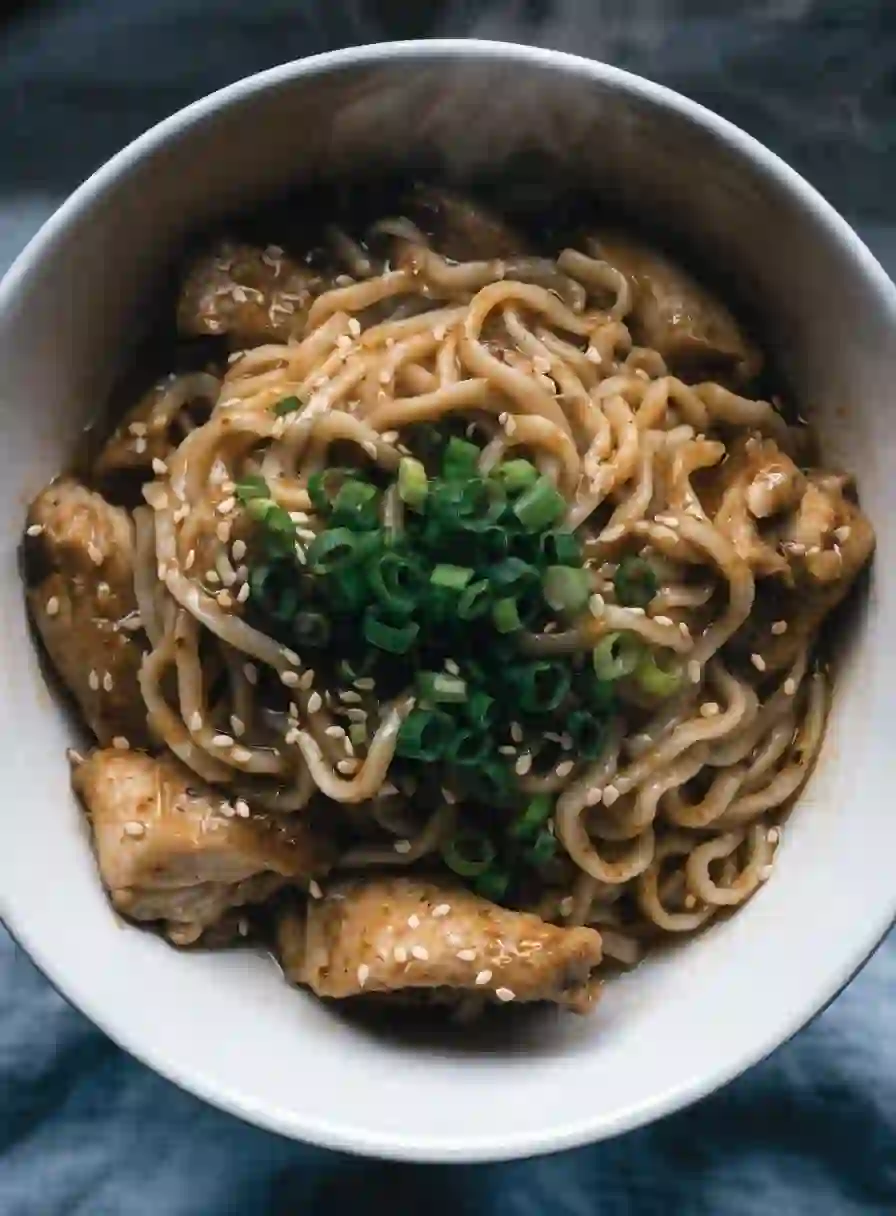

Easy Saucy Ramen Noodles with Chicken
Ingredients
Equipment
Method
- Bring a pot of water to a boil. Add the ramen noodles and cook until just tender, slightly firm in the center.
- Before draining, reserve about 1/4 cup of the starchy noodle cooking water. Drain the noodles and set aside.
- While the noodles cook, heat a large skillet over medium heat. Add a little oil and cook the sliced chicken until golden and fully cooked. Remove from the pan and set aside.
- Lower the heat. Add minced garlic to the same pan and cook for about 30 seconds until fragrant, stirring constantly so it doesn’t burn.
- Stir in soy sauce, sesame oil, brown sugar (or honey), and chili paste. Mix well. Add a splash of the reserved noodle water and stir until the sauce becomes slightly glossy.
- Add the drained noodles to the pan. Toss well to coat evenly in the sauce. If the noodles look dry, add another small splash of noodle water.
- Return the cooked chicken to the pan and toss until heated through and fully coated.
- Add eggs by either soft boiling them separately or cracking them directly into the noodles and stirring until cooked.
- Transfer to a bowl. Top with chopped green onions and serve immediately.
Notes
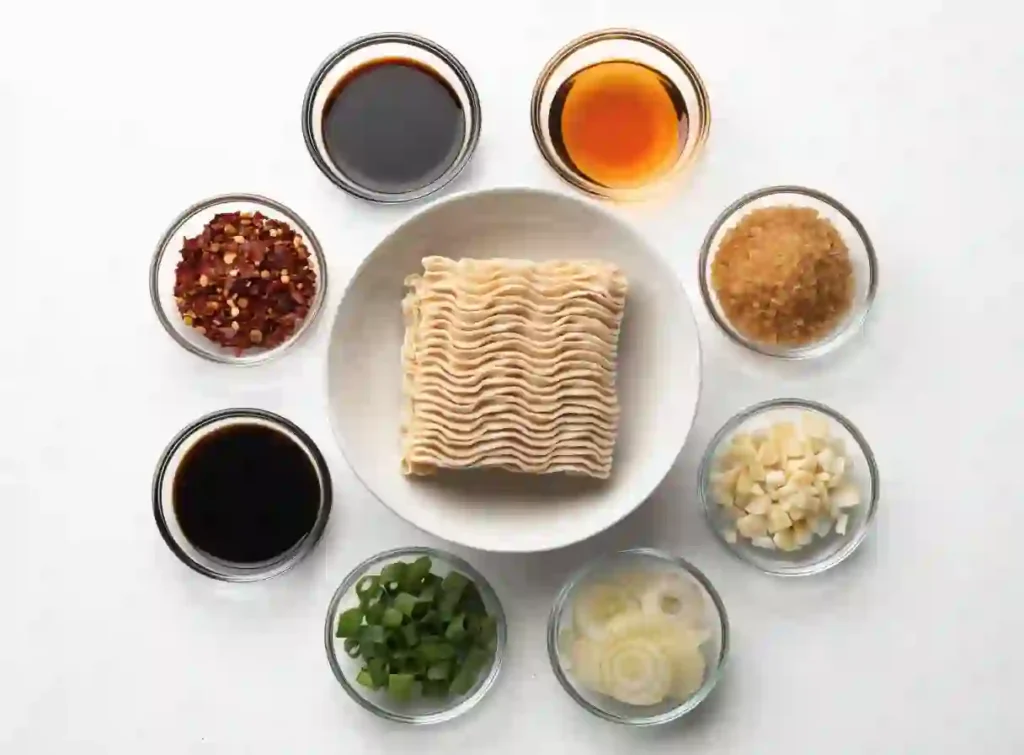
Ingredients You’ll Actually Use
Nothing fancy here. If your kitchen isn’t a disaster zone, you’re probably already set.
Two packs of instant ramen. Whatever brand is cheapest or already sitting in the cabinet. I usually toss the seasoning packet. Sometimes I keep half if I want it saltier. Depends on the day.
For the sauce you need:
- Soy sauce
- Sesame oil
- Brown sugar or honey
- Garlic. Fresh is better but the jar stuff is fine.
- Chili paste or sriracha if you like a little heat
That’s it. That’s the whole base. Five things. When they hit the pan together, it smells like you’re doing something impressive even though you’re not.
Now the protein. This is where you decide how filling you want this to be.
Chicken breast is the safe option. Cook it, slice it thin, throw it in.
Shrimp is quick and feels slightly fancy but takes almost no effort.
Tofu works if you crisp it first. If you skip that step, it’s kind of soft and boring.
Eggs are the easiest move. Two soft boiled. Or just crack them into the pan and scramble them into the noodles. Not pretty, still good.
You’re aiming for roughly 4 to 6 ounces per serving. I don’t weigh it. I just look at it and think, yeah that’s probably enough. If the bowl looks heavy, you’re good.
If you want texture so it doesn’t feel flat:
- Green onions
- Sesame seeds
- A handful of spinach tossed in at the end
- Frozen broccoli straight from the freezer
The noodles cook fast. Before you drain them, grab a splash of that cooking water. That cloudy water is what helps the sauce stick instead of just sitting there.
I don’t measure the sauce exactly either. Sometimes I go heavier on soy sauce. Sometimes more sesame oil because I want it richer. If it tastes flat, it probably needs salt. Or a tiny bit more sugar. You adjust it once and after that you kind of stop thinking about it.
How I Actually Make It
I don’t make this complicated. Water goes on first. That’s the only thing that actually takes time. While it’s heating up, I deal with whatever protein I’m using.
If it’s chicken, I slice it thin because thick pieces take forever and I’m not in the mood, Salt it. Hot pan. A little oil. Let it cook without touching it too much. Flip once. Good enough. Shrimp is faster. They curl, turn pink, done. Tofu takes patience. If I crowd the pan or move it too soon, it sticks and stays soft. When I let it sit, it gets that golden crust and it’s way better.
When the water’s boiling, noodles go in. I loosen them with a fork and leave them alone. I don’t let them go fully soft. Slight bite is better. They finish cooking later in the pan anyway.
Before I drain them, I scoop out some of that cloudy water. I never measure it. Just a small mug or a ladle. Then I drain the noodles and move fast so they don’t clump.
Back to the same pan. I turn the heat down. Garlic goes in first. I keep it moving. If it browns too much, it tastes sharp and bitter and then the whole thing feels off.
Then soy sauce, sesame oil, sugar, chili paste. It looks thin and kind of underwhelming at first. That’s normal. I add a splash of the noodle water and stir. That’s when it changes. It thickens slightly and turns glossy. Not heavy. Just coated.
Noodles go back in. I toss them hard so the sauce grabs onto everything. If it looks dry another splash of that noodle water fixes it. If it looks too loose I let it sit on the heat for a minute and it tightens up.
Protein goes in last. Just long enough to warm through and get coated. I taste it straight from the pan. Most of the time I add a little more soy sauce. Sometimes more chili paste. It depends.
Then it goes into a bowl. Green onions if I have them. If not, I eat it anyway.
When It Doesn’t Turn Out Right
Sometimes it’s too salty. Not just a little. You take one bite and your face tells you before your brain does. That usually means I got lazy with the soy sauce. Or I dumped the whole seasoning packet in without thinking.
If that happens, I just add hot water. A splash first. Toss it around. Taste it again. Maybe another splash. It softens the sharpness. Not perfect. But good enough to keep eating.
Flat is worse, honestly. Salty you can fix fast. Flat just sits there. When that happens I stare at the pan for a second like it’s going to answer me. Usually it needs more salt. Or a tiny bit of sugar. And I mean tiny. I add a little, stir, taste, repeat. It’s not precise. It’s just back and forth until it feels right.
The noodles can get weird too. If you drain them and then check your phone for a minute, they clump. One solid block. Looks like a mistake you can’t undo. You can. Throw them back in the pan with a splash of water. Break them apart. It looks messy at first. Then it loosens.
Sometimes the sauce gets too thick. Almost gluey. That’s just too much heat. Lower it. Add water. Stir. It relaxes pretty quickly.
Dry chicken is another thing. That’s on you. Or on me. It means it cooked too long earlier. When you add it back in, just warm it through. Don’t let it sit there while you wander off. It only needs a minute.
And then there are days when it tastes slightly off and you can’t even explain why. Nothing obvious. I stop trying to figure it out. I fry an egg. Drop it on top. Break the yolk. Mix it in. Somehow that fixes most things
What I Add When I’m Extra Hungry
Sometimes the bowl is fine as is. I eat it. I’m good.
Other times I finish half of it and already know I should have made more.
So I start adding things.
Spinach is the easy one. I grab a handful and toss it in at the end. It shrinks down to almost nothing. Makes the bowl look greener. I tell myself that counts for something.
Green onions if they’re in the fridge. If not, whatever. Sesame seeds are nice but I forget about them half the time.
If I want crunch, I slice up cabbage real thin. Or carrots. Raw. I don’t cook them first. I like that little snap in between the soft noodles. Makes it feel less heavy.
Leftover chicken from the fridge is honestly better than cooking a fresh piece, It already has flavor. I shred it with my hands and throw it in. Let it warm up in the sauce.
Sometimes I add two eggs. Not because I planned it. Just because I’m still hungry and eggs are right there. I’ll soft boil them if I have patience. If not, I fry one and drop it on top. Break the yolk. Mix it through.
Peanut butter goes in when I want it thicker. Just a spoonful. It melts into the sauce and suddenly it’s richer. Slightly messy. I don’t measure it.
And then there are nights when I’m just cleaning out the fridge. Half a pepper. A scoop of leftover rice. Random herbs that are on their last day. It’s not coordinated. It’s just whatever needs to be used.
Sometimes it turns out better than the original bowl. Sometimes it’s a little chaotic.
Still eat it.
Leftovers and The Next Day Situation
If there are leftovers, which honestly doesn’t happen often, they go in the fridge. Nothing special. Just a container with a lid that sort of fits.
The next day it looks… not great. The noodles stick together. The sauce thickens up and kind of disappears into everything. It’s not pretty.
I don’t microwave it dry. That’s a mistake. It turns into a tight block and the edges get weird.
I always add a splash of water before reheating. Just a little. Stir it if I can. Then microwave it in short bursts. Stir again. It loosens up. Not exactly like fresh, but close enough.
Sometimes I reheat it in a pan instead. That’s better if I have time. A small splash of water. Medium heat. Toss it around until it wakes up again.
If I know I’m saving some for later, I might keep the protein separate. Especially shrimp. It gets rubbery fast. Chicken is more forgiving. Tofu is fine either way.
Cold ramen straight from the fridge is not good. I’ve tried. I don’t recommend it.
If it feels dry the next day, I’ll add a tiny bit more soy sauce or even a few drops of sesame oil while reheating. Just enough to bring back some flavor.
It’s never exactly the same as when it was fresh in the pan. Still good though. I eat it anyway.
The Late Night Version
This is the one I make when it’s late and I’m not pretending to be balanced.
It’s usually after 10. I’m tired. I don’t want to chop anything. I don’t want to think.
Water on. Noodles in. That’s it.
While they cook, I pour soy sauce straight into the bowl I’m going to eat from. Sesame oil too. No measuring. If I feel like it, a little chili paste. If not, whatever.
Sometimes I crack an egg right into the boiling noodles. No ceremony. It swirls around and cooks in messy strands. Looks questionable. Tastes fine.
I drain most of the water but not all of it. A little stays behind. That’s on purpose. I dump everything into the bowl with the sauce and stir until it all comes together.
If there’s cooked chicken in the fridge, I’ll throw some in. If not, I don’t go back and cook anything new. It’s late. Eggs are enough.
There are nights I put a slice of cheese on top. I know. But it melts into the noodles and makes it creamy in a way that’s hard to explain. I started doing that years ago and never stopped.
I usually eat it standing in the kitchen. Or on the couch with the lights low. It’s not the best version. It’s not the careful one.
It just hits.
The Late Night Version
This is the one I make when it’s late and I’m not pretending this is some kind of balanced dinner.
It’s usually after 10. Sometimes closer to midnight. I’m tired. I’m not chopping anything. I’m not pulling out extra pans.
Water on. Noodles in. That’s the entire strategy.
While they’re cooking, I grab the bowl I’m going to eat from and pour in soy sauce. A quick splash of sesame oil, No measuring. I look at it and think, yeah that’s probably fine. If I want heat, I add chili paste. If I don’t, I skip it and don’t think twice.,
Sometimes I crack an egg straight into the boiling noodles. No bowl, no whisking. It swirls around and cooks into soft pieces. Looks a little chaotic. Still tastes good.
I don’t drain the noodles all the way. I leave a bit of that water in there. Not enough to make soup .Just enough so when I dump everything into the bowl and stir, it turns into sauce instead of drying out.
If there’s leftover chicken in the fridge, I’ll throw some in. If not, I’m not cooking anything new. It’s too late for that. One egg. Maybe two, Good enough.
Some nights I put a slice of cheese on top. I know. But it melts into the noodles and makes everything creamy and salty. I’ve done it for years. I’m not stopping now.
I eat it standing at the counter half the time. Or on the couch with something random playing in the background.
It’s not careful. It’s not impressive.
It’s just what I want at that hour.
When I Actually Want It To Feel Like A Real Meal
Every now and then I slow down with it.
Not a lot. Just enough to make it feel less like a quick fix.
I’ll cook the protein properly. Season it. Let it brown. Not just cook it through, but actually let it sit in the pan long enough to get some color That alone changes everything.
I might sauté mushrooms first. Let them shrink down and get dark. They soak up the sauce later and taste way better than when you just toss them in raw.
Sometimes I’ll soft boil an egg the right way. Six or seven minutes. Peel it carefully. Slice it in half so the yolk spills out on purpose instead of by accident.
I’ll taste the sauce before the noodles go back in. Adjust it slowly. Maybe a little more sesame oil. Maybe a pinch more sugar. Not rushing it.
I’ll even warm the bowl if I’m feeling dramatic.
It’s still ramen. It’s still simple. But when I take a few extra minutes, it feels less like something I threw together and more like something I meant to make.
Same ingredients. Just a little more attention.
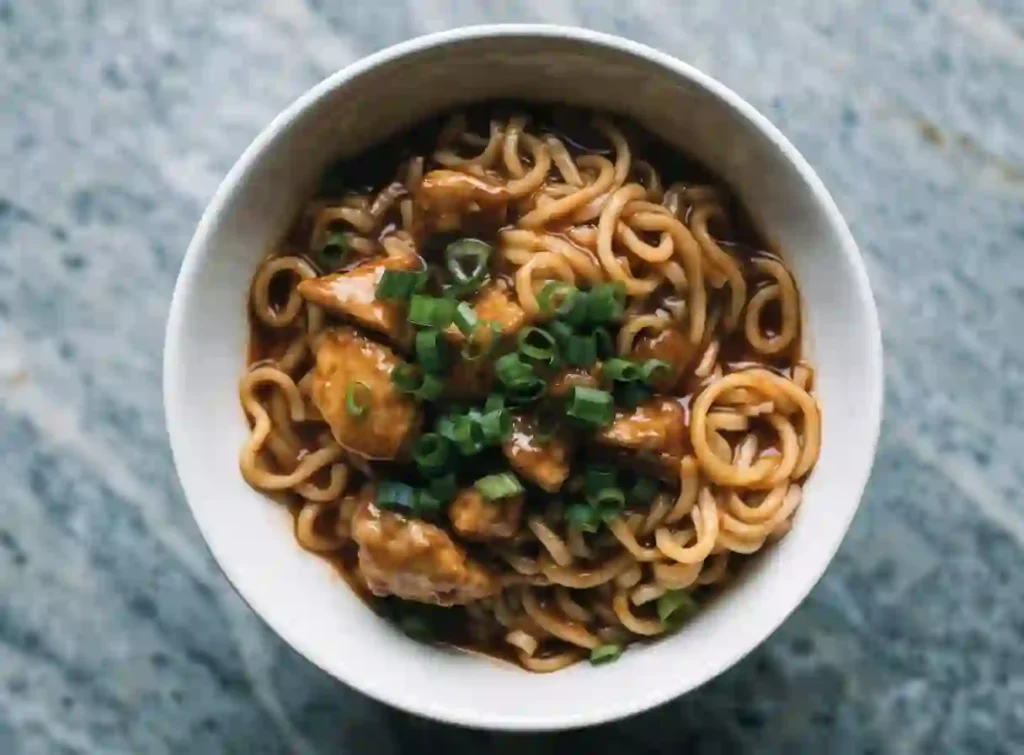
Final Thoughts
It’s just ramen.
That’s it. No big story behind it. No rules. Just something I end up making again and again because it works.
Some nights I care about how it looks. I slice things neatly. I wipe the bowl before serving. Other nights I’m half tired, barely paying attention, stirring noodles straight in the pot and eating them five minutes later.
Both versions feel right at the time.
I like that it doesn’t demand much. If I have extra stuff, I throw it in. If I don’t, I don’t. It still turns into something warm and salty and filling.
There’s always a pack of noodles somewhere in the kitchen. That alone says a lot.
It’s not the meal I brag about. It’s the one I actually make.
And I’ll probably make it again this week without thinking twice about it.
Leave a Reply