
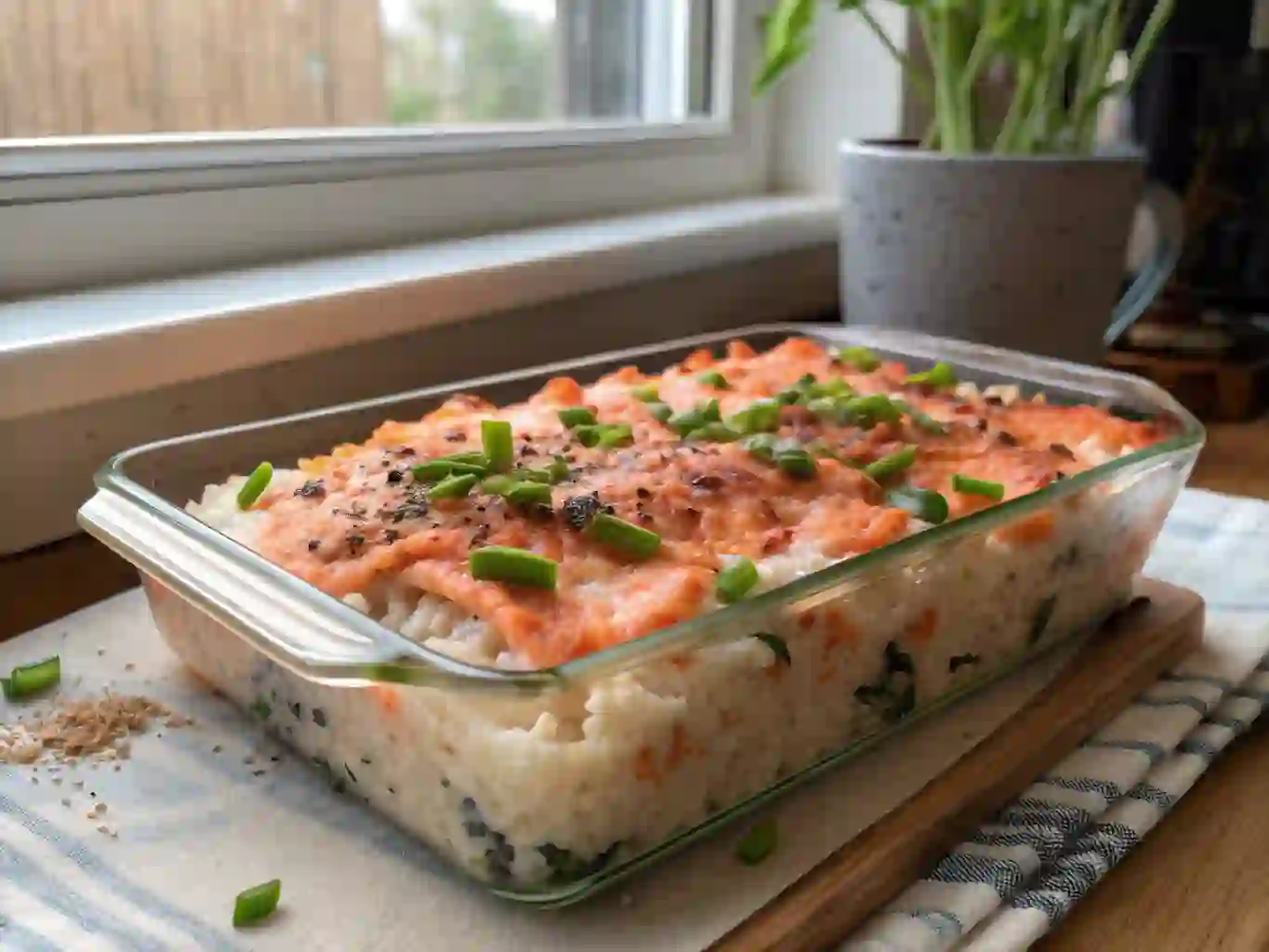
Love sushi but don’t have the time – or let’s be honest, the patience – to roll it piece by piece? You’re not alone. This Spicy Salmon Sushi Bake is here to save your weeknight dinner and your cravings in one delicious swoop.
It’s not traditional sushi – and that’s the point. Think layers of fluffy seasoned rice, spicy creamy salmon, a crispy top straight from the oven, and seaweed on the side for scooping. It’s cozy. It’s bold. It’s the kind of fusion comfort food you’ll make once… and crave forever.
Perfect for:
Lazy weeknights that still deserve something amazing
Crowd-pleasing dinners (yes, even picky eaters love it)
A sushi-style fix without the sushi chef stress
If this is your first time trying a sushi bake, don’t stress – it’s beginner-friendly, customizable, and shockingly easy. Let’s get into it.
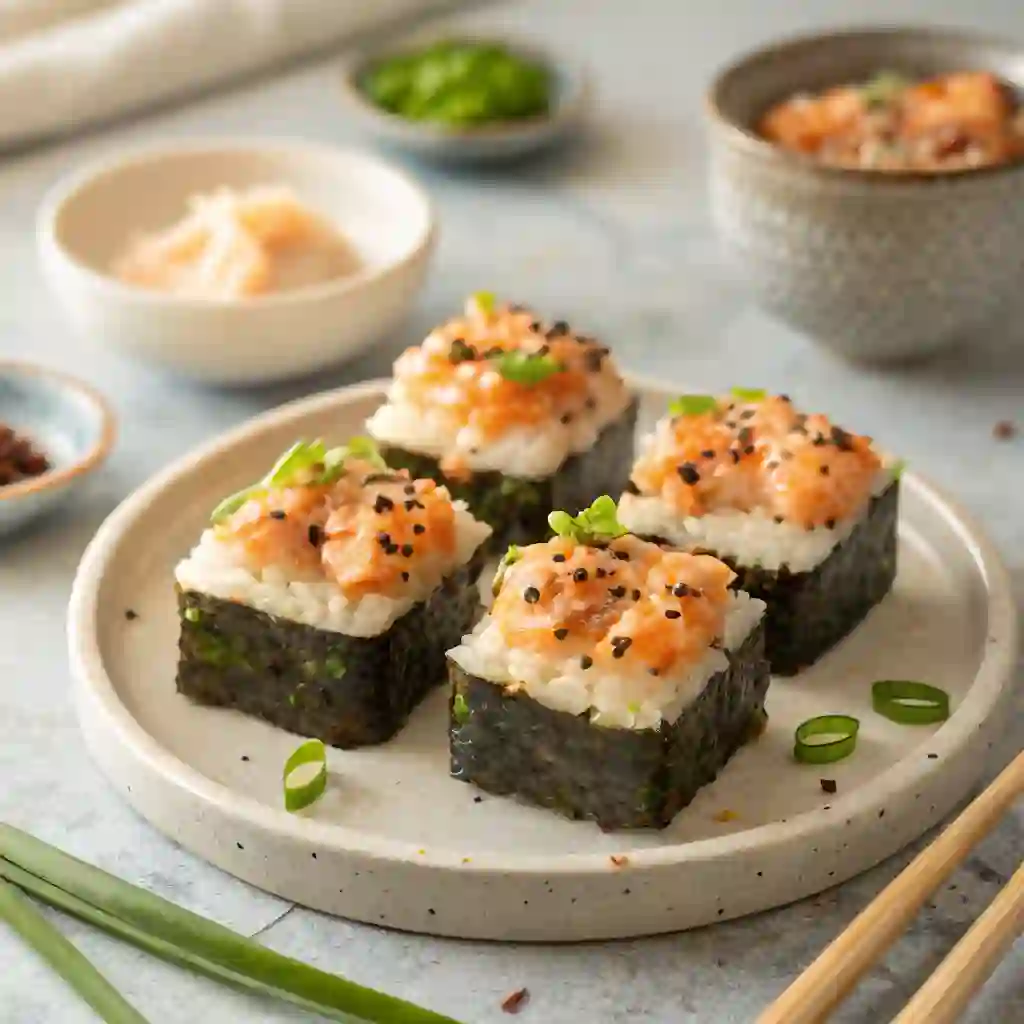

Easy Spicy Salmon Sushi Bake
Ingredients
Equipment
Method
- Preheat the oven to 375°F (190°C). Lightly grease a baking dish and set it aside.
- Place the warm cooked rice in a bowl. Add the rice vinegar, sugar, and salt, then gently mix until evenly seasoned.
- Spread the seasoned rice into the prepared baking dish. Press it down lightly into an even layer without compacting it too much.
- In a separate bowl, combine the cooked salmon, mayonnaise, sriracha, soy sauce, sesame oil, and cream cheese if using. Mix gently until creamy but still chunky.
- Spoon the spicy salmon mixture evenly over the rice layer. Smooth the top lightly.
- Sprinkle furikake seasoning evenly over the top of the salmon mixture.
- Bake uncovered for 20–25 minutes, until the edges are bubbling and the top is lightly golden.
- Optional: Turn on the broiler for 1–2 minutes to lightly crisp the top. Watch closely to prevent burning.
- Remove from the oven and let rest for 5 minutes. Top with green onions, sesame seeds, and diced avocado if desired.
- Serve warm and scoop with roasted seaweed sheets or enjoy with a spoon.
Notes
- Rice texture matters. Slightly warm rice works best. Cold rice can dry out in the oven, while hot rice can turn mushy once mixed.
- Adjust the spice to your taste. If you prefer mild heat, reduce the sriracha and add a little extra mayo or cream cheese. For more heat, add chili crisp or extra sriracha.
- Salmon options. Fresh baked salmon gives the best texture, but canned salmon works well too. Just drain it thoroughly before mixing.
- Broiling tip. If you broil the top, stay close to the oven. The sushi bake can go from golden to burned very quickly.
- Serving suggestion. This dish is best served warm and scooped with roasted seaweed sheets, but it’s also delicious with a spoon or over extra rice.
- Storage. Leftovers can be refrigerated for up to 2 days. Reheat gently in the oven or microwave. Freezing is not recommended, as the rice texture changes.
What You’ll Need (a.k.a. The Real Stuff Behind the Flavor)
Before we jump into baking, let’s talk about what makes this dish actually awesome. This isn’t one of those “fancy for no reason” recipes. It’s flexible, comfort-driven, and built for real-life kitchens – yes, even the one with half-empty mayo jars and leftover rice.
The Rice Base (because it’s not sushi without it)
- 2 cups cooked short-grain rice (leftover rice totally works)
- 2 tablespoons rice vinegar
- 1 tablespoon sugar
- ½ teaspoon salt
→ Think slightly tangy, slightly sweet, warm and sticky rice – it’s the soft bed your spicy salmon is about to nap on.
The Spicy Salmon Mix (this is where the flavor lives)
- 1½ cups cooked salmon, flaked (fresh, baked, or even canned – no shame here)
- ½ cup Kewpie mayo (or sub regular mayo with a tiny pinch of sugar)
- 2 tablespoons Sriracha (less if you’re sensitive, more if you’re brave)
- 1 teaspoon soy sauce
- 1 teaspoon toasted sesame oil
- Optional but worth it: 1 tablespoon cream cheese – for that melt-in-your-mouth feel
→ This is the flavor bomb. Spicy, creamy, smoky, a little rich – like if sushi got cozy in a casserole.
The Toppings (aka: the “wow” layer)
- 2 tablespoons furikake (Japanese rice seasoning – salty, crunchy, a little sea-flavored)
- ½ avocado, diced (optional, but adds creaminess)
- A handful of sliced green onions or chives
- Toasted sesame seeds
- Roasted seaweed sheets (nori) or seaweed snacks for scooping
Quick Real-Talk Tip:
No salmon? Use canned tuna. No Kewpie? Go with classic mayo + a squeeze of lemon or sugar. This dish does not judge. It flexes with what’s in your fridge.
How to Make Spicy Salmon Sushi Bake (Real-Life Version)
Okay. Take a breath. This isn’t baking a cake where one wrong move ruins everything. This is layering good stuff and letting the oven do the work.
Step 1: Start with the rice
If your rice is already cooked, great. If it’s leftover, even better. Warm it up a bit . not hot, just comfortable.
Mix in the rice vinegar, sugar, and salt. Use a spoon. Be gentle. The rice should stay fluffy, not squished.
Spread it into your baking dish and lightly press it down. Not hard. Just enough so it doesn’t fall apart later.
Quick check: taste a bite. If the rice tastes good now, you’re winning.
Step 2: Mix the salmon
Grab a bowl. Add the salmon, mayo, Sriracha, soy sauce, sesame oil. and cream cheese if you’re using it.
Mix slowly. It shouldn’t turn into paste , you still want pieces of salmon.
Now stop. Taste it.
Too spicy? Add mayo.
Too boring? A little more Sriracha.
Something feels “heavy”? A tiny splash of soy sauce fixes that.
This part isn’t scientific. It’s vibes.
Step 3: Put it together
Spoon the salmon mixture over the rice. Spread it out but don’t stress about making it perfect. Once it bakes, nobody will know.
Sprinkle furikake on top. This is where it starts smelling like sushi night without the stress.
Step 4: Into the oven
Set your oven to, 375°F (190°C).
Bake it uncovered for about 20–25 minutes.
You’re looking for:
Soft bubbling around the edges
A slightly golden top
If you like a little crisp on top (I do), turn on the broiler for the last 2 minutes. Don’t walk away. This is where things can betray you.
Step 5: Finish and eat
Take it out and let it sit for a few minutes. Not because you have to , but because molten sushi bake is dangerous.
Add avocado, green onions sesame seeds.
Scoop it with seaweed. Don’t overfill. It falls apart anyway. That’s part of the fun.
Real Question: Does this need to look perfect?
No. If it smells good and tastes good, it is good. Sushi bake is meant to be messy, cozy, and shared , not photographed for five minutes before eating
Tips & Tricks for a Really Good Spicy Salmon Sushi Bake
Let’s be honest for a second: this recipe is hard to mess up. But there are a few small things that can take it from “yeah, that was good” to “okay, why is this so addictive?”
Don’t overdo the rice
This is probably the most common mistake. Too much rice, and suddenly the whole thing feels dry and heavy. You want a solid base, yes but not a brick.
If your baking dish is on the larger side, resist the urge to spread the rice too thick. A thinner, even layer works way better.
Warm rice > cold rice
Cold rice straight from the fridge tends to clump and dry out in the oven . If you’re using leftovers warm it up slightly before seasoning. Not hot. Just… awake.
It makes a bigger difference than you’d expect.
Taste before you bake
I know, I know – it’s raw mixing, and people skip this step. But tasting the salmon mixture before it goes into the oven is key.
Once it’s baked, fixing the flavor is much harder.
Ask yourself:
Is it spicy enough for me?
Does it need a little more salt?
Would a touch more mayo calm it down?
Adjust now. Thank yourself later.
Broil carefully (this is not the moment to multitask)
That last 1–2 minutes under the broiler can give you a beautiful, lightly crispy top.
It can also burn everything in seconds.
If you broil, stand there. Don’t check your phone. Don’t walk away. Just watch it like it owes you money.
How you eat it matters
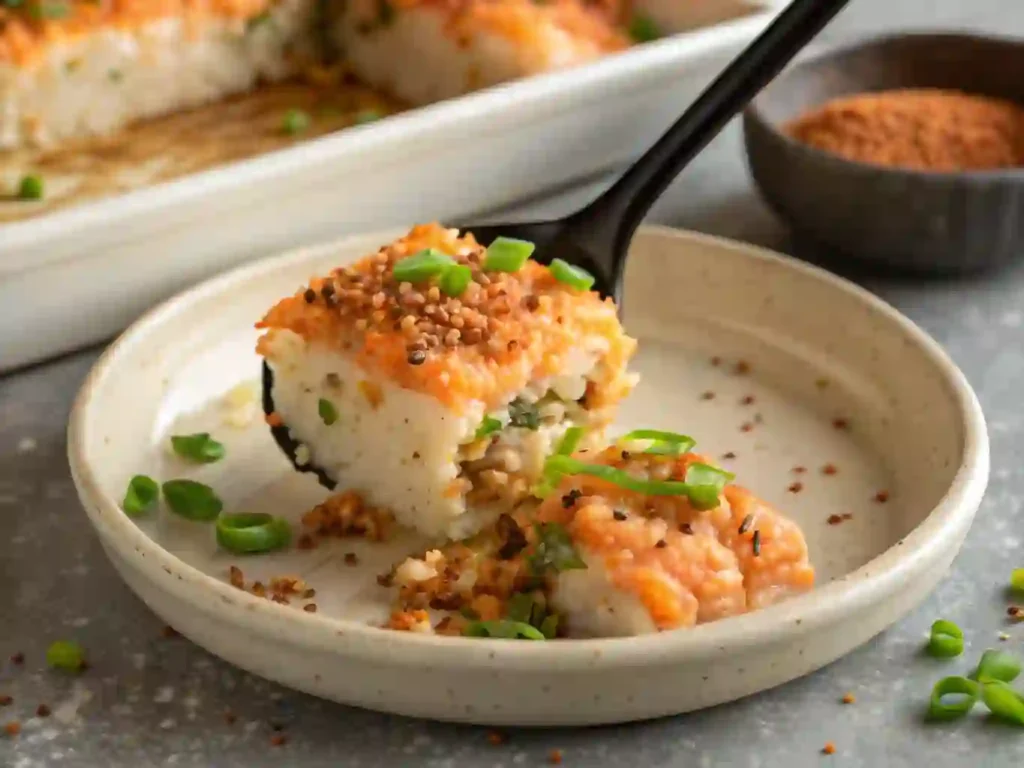
This dish is meant to be scooped, not sliced. Use roasted seaweed sheets or seaweed snacks, grab a bit of everything and accept that it’ll be a little messy.
If it falls apart? Good. That means it’s soft, creamy, and exactly how it should be.
FAQ: Why does my sushi bake feel dry?
Most of the time, it’s either too much rice or not enough sauce. Next time slightly reduce the rice layer or add an extra spoon of mayo to the salmon mix before baking.
Variations & Substitutions (Make It Your Way)
One of the best things about a sushi bake is that it doesn’t lock you into one version. Once you understand the base idea rice + creamy topping + oven you can start bending the rules a little. Or a lot. I’ve done both.
No salmon? No problem
Salmon is popular, but it’s not mandatory.
Canned tuna works surprisingly well. Drain it properly and mix it the same way you would salmon.
Imitation crab (kani) gives you that classic California-roll vibe. Tear it by hand instead of chopping better texture.
Leftover cooked chicken also works. It won’t taste like sushi, obviously, but it becomes a cozy, savory bake that still makes sense.
Different protein, same comfort.
Want it less spicy (or more dangerous)?
Spice level is personal. Very personal.
For mild : cut the Sriracha in half and add a little extra mayo or cream cheese.
For extra spicy : add chili crisp. gochujang, or even a few drops of chili oil on top before baking.
For a sweet-spicy balance: mix in a tiny bit of honey or sugar. It sounds weird. It’s not.
Dairy-free or lighter version
If mayo feels too heavy some days, you’ve got options.
Use light mayo or half mayo, half plain yogurt
Skip the cream cheese completely – the bake still works
Add avocado after baking for creaminess without extra sauce
It won’t be the same but it’ll still be good.
Vegetarian / plant-based version
Is it sushi bake without fish? Purists would argue. I don’t.
Use baked tofu (firm, well-seasoned, slightly mashed)
Add sautéed mushrooms for umami
Mix with vegan mayo + sesame oil + soy sauce
The texture is different, yes – but it scratches the same comfort-food itch.
FAQ: Will changing the ingredients ruin the recipe?
Honestly? No. As long as you keep the balance seasoned rice + creamy topping – the dish holds up. Some versions surprise you in a good way.
Spicy Salmon Sushi Bake – The Stuff Everyone Wonders About
So… can I keep leftovers or should I just eat it all?
Honestly? If you can finish it the same day, that’s the best version of this dish. Fresh, warm, creamy – that’s when it really hits.
But real life happens. If there are leftovers, let them cool, put them in a container, and keep them in the fridge. They’ll be fine for a day or two. After that, IT’s still food but the rice gets firmer and the sauce loses that cozy, melty feel. Not bad. Just not exciting.
What’s the best way to reheat it without ruining it?
If you’re not in a rush, use the oven.
Cover it lightly with foil and heat it at 350°F (180 ) until it’s warm again This keeps the rice from drying out too much
If you’re hungry right now, the microwave is okay. It’s not a crime. The texture changes .the rice gets softer, maybe a little sticky , but the flavor’s still there. Some days, that’s good enough.
Can I freeze sushi bake?
I wouldn’t.
Rice and mayo don’t really recover after freezing. When it thaws, things separate, the texture feels off, and it just doesn’t taste the way you want it to.
If you’re planning ahead, a better idea is to prep everything, keep it in the fridge, and bake it fresh later. Way better payoff.
What if I don’t have seaweed sheets?
No big deal at all.
You can eat it with a spoon. Put it over extra rice. Scoop it with lettuce. I’ve even seen people use crackers or toast.
Is it still “sushi-style”? Maybe not.
Does it still taste good? Yes. And that’s what actually matters.
Is sushi bake really sushi?
Not in the traditional sense, no.
But flavor-wise? It scratches the same craving.
Think of it as sushi without the pressure – no rolling, no perfection, no rules. Just familiar flavors in a form that fits normal, busy, slightly messy kitchens.
Final Thoughts
This is food you make because it sounds good.
Not because it’s special. Not because it’s impressive.
Just because you want to eat something warm and satisfying without doing too much.
You put it together. You bake it. You wait.
When it’s ready, you don’t care how it looks. You just take a bite.
Some parts are spicier. Some parts have more rice. That’s fine.
You scoop it with whatever’s nearby. You eat. Maybe you go back for more.
Next time you make it, you’ll probably change something.
Less sauce. More heat. Different topping. You won’t think about it much.
It’s not sushi.
It’s not trying to be.
It’s just an easy meal that works when you’re tired and hungry.
And if it tastes good, that’s enough.
Leave a Reply