
High-protein weeknight dinners sound simple. In theory.
Cook some chicken. Add a vegetable. Done.
Except it’s 6:12 pm. You’re tired. The chicken is frozen. Or worse, you forgot to buy it. Again.
That’s usually where it starts falling apart. Not the protein part. The thinking part.
Most nights aren’t about cooking. They’re about decision fatigue. You’ve already made fifty tiny choices that day. Work stuff. Texts. Groceries. Random life admin. Then dinner shows up like a pop quiz. And suddenly “high-protein weeknight dinners” feel like a whole project.
It’s not really about protein. It’s about energy.
And maybe expectations. There’s this weird pressure that dinner has to be balanced and impressive and not boring. Which is funny because on a Wednesday, nobody actually wants impressive. They want edible. Fast. Preferably without ten dishes in the sink.
The 6 PM Brain Fog Problem
Around that time your brain just… slows.
You open the fridge. Stare. Close it. Open it again like something new might appear.
This is where most people mess up. They start from scratch every night. They ask, “What should I cook?” which is the worst possible question when you’re tired. It’s too open. Too many options.
High-protein weeknight dinners feel hard because the starting point is vague. No anchor. No default.
So you end up doing one of three things:
- Ordering takeout
- Throwing pasta in a pot and calling it fine
- Eating random snacks and pretending it counts
Not judging. I’ve done all three. Probably this week.
It’s Not the Cooking. It’s the Setup.
If dinner feels stressful, it’s usually upstream. Grocery shopping without a plan. Buying ingredients instead of meals. Thinking you’ll “figure it out later.”
Later always comes. And later is tired.
Also, protein has this reputation for being complicated. People think it has to be grilled perfectly or macro-counted or portion-measured. It doesn’t. Most of the time you just need something solid on the plate. Chicken thighs. Eggs. Greek yogurt. Ground beef. It’s not fancy.
The real fix isn’t better recipes. It’s fewer decisions.
You probably don’t need more ideas. You need fewer moving parts.
So What Actually Makes Weeknight Dinners Stressful?
Usually:
- No clear protein ready to go
- Too many choices
- Hunger hitting before a plan exists
- Trying to cook like it’s Saturday
That’s it. Not a character flaw. Not a discipline issue. Just friction.
High-protein weeknight dinners stop feeling overwhelming when you stop reinventing dinner every night.
The Protein-First Way to Handle Weeknights
Okay. So instead of asking “what’s for dinner?”
Ask something smaller.
What’s the protein.
That’s it.
High-protein weeknight dinners get easier when you stop building meals and start placing anchors. Protein first. Everything else after. It sounds obvious. It kind of is. But most people don’t actually do it.
They think in recipes. That’s the trap.
If you start with a full recipe in your head, you’ve already created work. If you start with a protein sitting in the fridge, the rest is just background noise.
Chicken thighs. Ground turkey. Eggs. Tofu. Greek yogurt. Rotisserie chicken if we’re being realistic.
Pick one. That’s dinner’s spine.
Build Around One Solid Thing
Once the protein is decided, the rest doesn’t need drama. It just needs to exist.
Add something green.
Add something filling.
Add salt or sauce so it doesn’t taste sad.
That’s the whole structure.
High-protein weeknight dinners don’t need five components. They need one solid piece and two supporting actors.
It might look like this:
- Ground beef in a pan
- Frozen broccoli roasted or microwaved
- Rice or potatoes or even toast
- Some kind of sauce you didn’t overthink
Done.
Is it restaurant-level? No.
Is it balanced enough? Usually, yes.
People get stuck because they think protein dinners require creativity. They don’t. They require repetition. Which sounds boring. It is boring. But boring works on Tuesdays.
Rotate, Don’t Invent
This is the part nobody talks about.
You don’t need new high-protein weeknight dinners every night. You need three or four you cycle through. Same proteins. Slightly different seasoning. Maybe you switch rice for tortillas. Maybe not.
If you keep buying random proteins each week, you reset the decision cycle. If you rotate the same five, your brain relaxes. It recognizes the pattern.
Less thinking. Less friction.
And honestly, most people don’t get tired of food as fast as they think they do. They get tired of deciding.
How Much Protein Does Dinner Even Need?
Enough that you’re not hunting for snacks at 9 pm.
For most adults, that’s roughly 25 to 40 grams at dinner. Doesn’t need to be precise. A palm-sized portion of meat usually covers it. Two eggs plus something else. A decent scoop of cottage cheese. You get the idea.
You don’t need a calculator every night.
You just need dinner to feel solid.
High-protein weeknight dinners get easier when they stop being a performance. When they’re just… structure.
Next part gets more practical.
5 High-Protein Weeknight Dinner Templates That Don’t Feel Like Work
Not recipes. Templates.
Because recipes are where energy goes to die on a Wednesday.
High-protein weeknight dinners get lighter when you stop following instructions and start repeating patterns. Same structure. Different flavor. That’s it.
Here are the ones that actually hold up.
1. The Bowl Situation
This one carries people through entire months.
Protein on the bottom or middle. Rice or potatoes or whatever carb you already made. A vegetable. Sauce. Done.
Example, not exact:
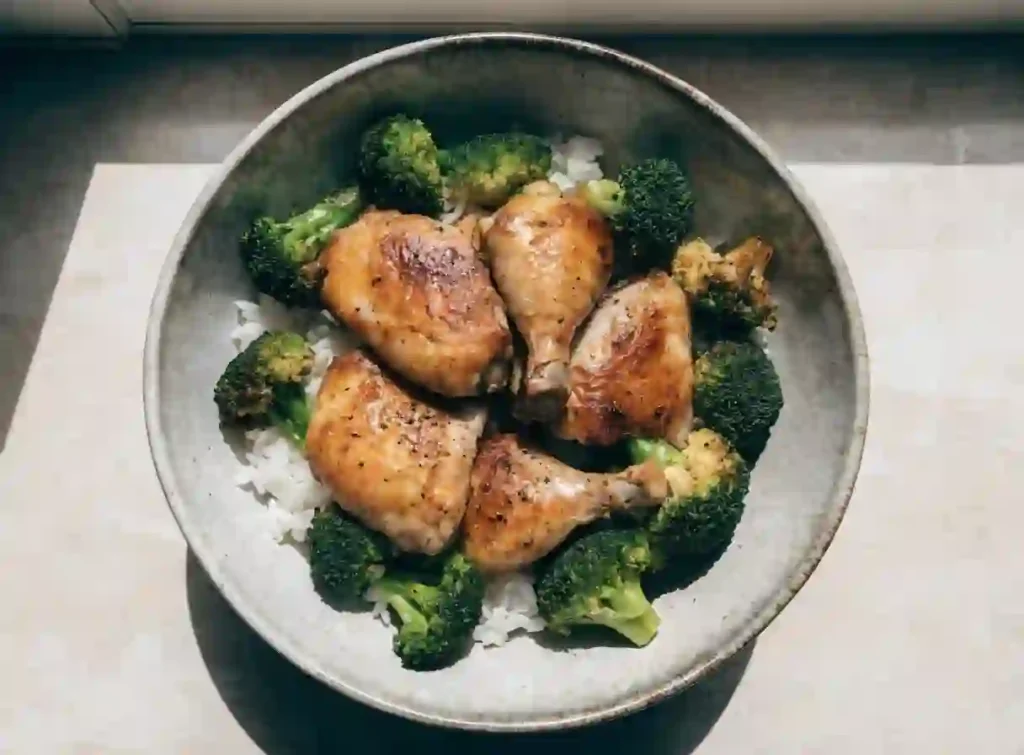
- Rotisserie chicken
- Microwave rice
- Bagged salad or frozen broccoli
- Store sauce you didn’t make
You can change the seasoning and pretend it’s new. Taco bowl. Mediterranean-ish bowl. BBQ bowl. It’s mostly the same thing.
High-protein weeknight dinners don’t need identity crises every night.
2. The Sheet Pan Night
Everything goes on one tray. Protein and vegetables together. Oil. Salt. Oven. Ignore it for twenty minutes.
Chicken thighs and carrots.
Sausage and peppers.
Salmon and green beans.
You’re not chasing multiple pans. That’s the whole point.
And yes, sometimes the vegetables get too soft. It’s fine. You’ll still eat it.
3. The Wrap or Taco Default
This one saves people more than they admit.
Cook ground beef or turkey. Add seasoning. Throw it into tortillas. Add whatever’s in the fridge.
Or skip cooking if you’re tired. Leftover chicken. Hummus. Cheese. Done.
High-protein weeknight dinners feel easier when they’re handheld. Less plate. Less cleanup. Less ceremony.
4. The Stir-Fry That Isn’t Fancy
Protein in a pan. Frozen stir-fry mix dumped in. Soy sauce or bottled teriyaki. Serve over rice.
You don’t need wok skills. You need heat and salt.
Sometimes it’s slightly soggy. Still edible. Still protein.
5. The “Snack Plate” That’s Actually Dinner
This one feels lazy but works.
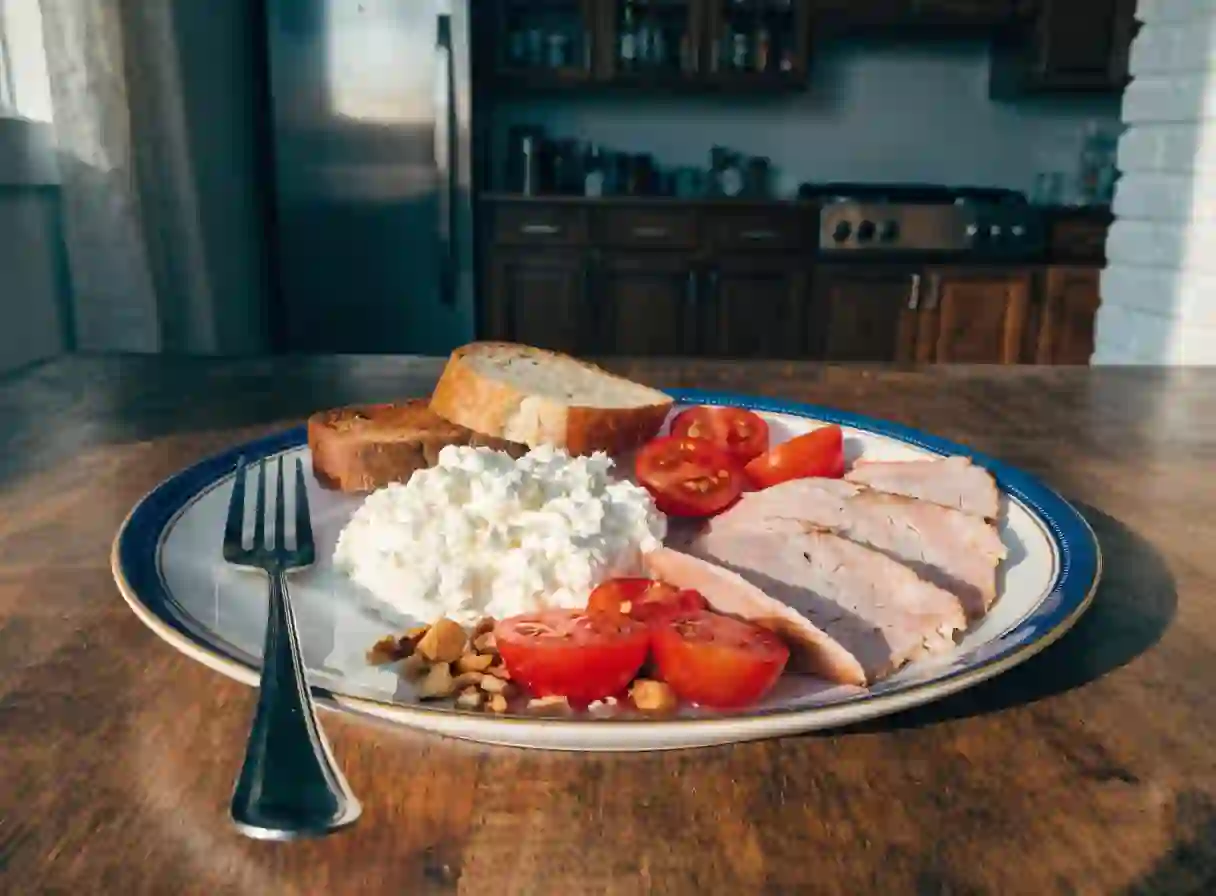
- Cottage cheese or Greek yogurt
- Deli turkey or smoked salmon
- Nuts
- Cherry tomatoes or cucumbers
- Toast or crackers
It doesn’t look like a traditional dinner. But it hits protein. And some nights that’s the bar.
High-protein weeknight dinners don’t have to look like dinner. They just have to do the job.
What If I Get Bored Eating the Same Structures?
You probably won’t as fast as you think.
Change sauce. Change seasoning. Swap rice for potatoes. Use hot sauce one week and yogurt sauce the next.
Most boredom is mental. Not taste-based.
And if you do get bored, rotate one template out. Not all five. Don’t burn the whole system down.
This is about reducing friction. Not chasing novelty.
We haven’t even touched groceries yet. That’s where this either works or collapses.
Groceries Are Where High-Protein Weeknight Dinners Either Work or Collapse
This part isn’t exciting. It’s not aesthetic.
But it’s the hinge.
High-protein weeknight dinners don’t fall apart at 6 pm. They fall apart at the grocery store when you buy random stuff and hope future-you figures it out.
Future-you is tired. Future-you resents past-you.
So instead of shopping for meals, shop for repeatable protein anchors. Same ones most weeks. Not because you lack creativity. Because your brain likes predictability when it’s fried.
If your cart looks wildly different every week, dinner will feel chaotic. If it looks mostly the same, weeknights calm down.
The “Core Few” Proteins
You don’t need twelve options. You need four or five that rotate.
Something like:
- Chicken thighs or breasts
- Ground beef or turkey
- Eggs
- Greek yogurt or cottage cheese
- One easy backup like rotisserie chicken or tofu
That’s enough to build high-protein weeknight dinners without reinventing your life.
Add frozen vegetables. Always frozen vegetables. They don’t judge you. They don’t rot in the crisper drawer while you pretend you’ll cook something ambitious.
Carbs can stay simple. Rice. Potatoes. Tortillas. Bread. Nothing complicated.
If you’re standing in the store asking “what sounds good this week?” that’s already too abstract. Ask instead: which proteins am I repeating.
Fresh vs Frozen vs “Already Cooked”
There’s this weird guilt around shortcuts. Ignore it.
Frozen chicken strips. Pre-cooked rice packets. Bagged salad. They exist for a reason. High-protein weeknight dinners are about consistency, not purity.
If you rely only on raw ingredients that require full cooking every night, you’re setting up friction. Some nights you’ll cook. Some nights you won’t. That’s normal.
So build layers:
- One protein that needs cooking
- One protein that’s already cooked
- One protein that requires zero heat
That way, even if you’re exhausted, there’s still a path.
It doesn’t have to be impressive. It just has to be there.
What Are the Easiest Proteins to Keep on Hand?
The low-friction ones.
Eggs last.
Greek yogurt lasts.
Ground meat freezes well.
Rotisserie chicken buys you two to three nights if you stretch it.
If something spoils quickly and requires a 40-minute recipe to shine, it’s not a weekday staple. It’s a weekend thing.
High-protein weeknight dinners get easier when your fridge feels predictable. Not packed. Predictable.
Next part is for the nights where even this feels like too much.
The 15-Minute High-Protein Weeknight Dinner Backup Plan
This is for the nights when even the templates feel like effort.
You’re standing there. Hungry. Slightly annoyed. Maybe everyone else is hungry too. High-protein weeknight dinners sound responsible in theory. In reality, you want something that requires almost no thinking.
So this is the backup layer. The emergency setting.
Not cute. Not planned. Just functional.
The Rotisserie Stretch
If there’s a rotisserie chicken in the fridge, you’re fine.
Pull it apart. Don’t overthink it.
Option one: throw it into tortillas with cheese.
Option two: dump it over microwave rice with whatever sauce exists.
Option three: mix it with Greek yogurt and hot sauce and eat it on toast.
That’s already high-protein weeknight dinner handled in under fifteen minutes.
You don’t need to season it like a chef. It’s already seasoned. Let it carry you.
Eggs Fix More Problems Than You Think
People forget eggs at dinner. No idea why.
Three or four scrambled with cheese and spinach.
Fried eggs over rice.
Eggs folded into leftover ground beef.
That’s protein. That’s fast. That’s warm.
If you add toast or potatoes, it suddenly feels like a real meal. Even if it wasn’t part of some grand plan.
High-protein weeknight dinners don’t care what time of day the protein usually shows up.
The Cold Plate That Counts
Some nights you genuinely don’t want to cook. Fine.
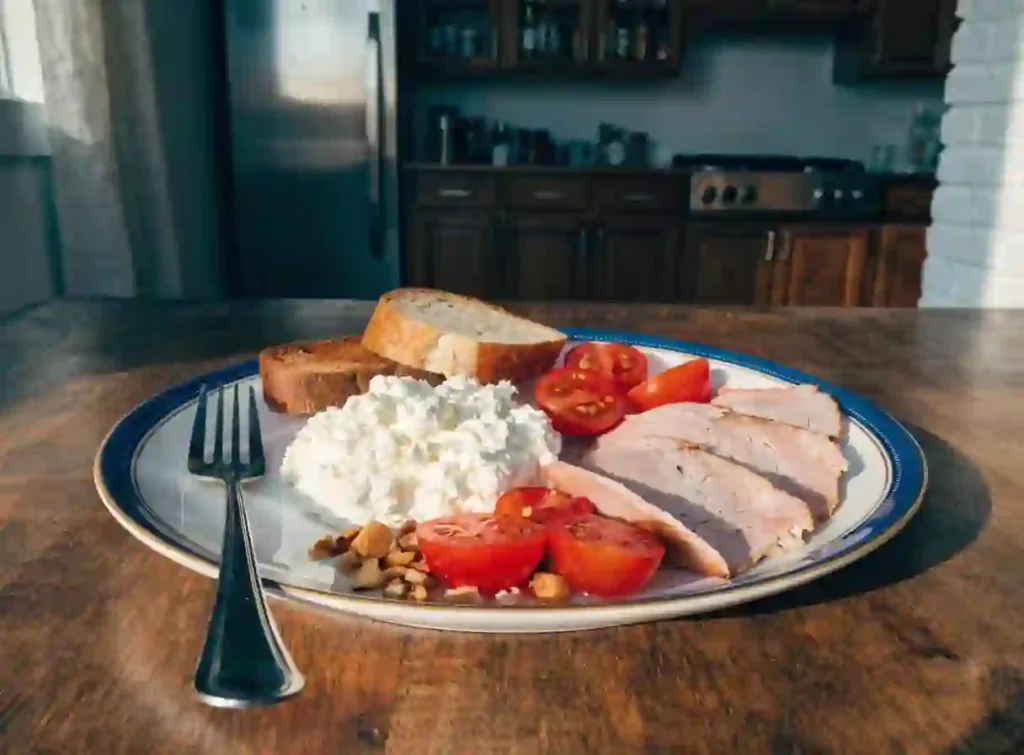
Cottage cheese.
Deli turkey.
Cherry tomatoes.
Nuts.
Maybe fruit.
Crackers or bread.
It feels random. It works anyway.
You can hit 30 grams of protein without turning on the stove. Which is sometimes the only goal.
And yes, it might feel slightly chaotic. That’s okay. Not every dinner needs a theme.
What If I’m Too Tired to Even Do This?
Then simplify further.
Protein shake plus toast and peanut butter.
Greek yogurt with granola and some nuts.
Leftover meat eaten straight from the container.
Is it elegant? No. Is it still high-protein weeknight dinner? Technically yes.
The point isn’t perfection. It’s having a floor you don’t fall below.
Because once you remove the “I have to cook something impressive” pressure, dinner stops feeling like a test.
There’s one more layer that makes all of this smoother. It’s not full meal prep. It’s lighter than that.
How to “Meal Prep” Without Actually Meal Prepping
Full meal prep is where people lose momentum.
Big containers. Matching lids. Three hours on Sunday. By Wednesday you’re tired of whatever you made and pretending you’re not.
High-protein weeknight dinners don’t need that level of commitment. They need light preparation. Bare minimum.
Think components. Not finished meals.
Cook two pounds of ground beef. That’s it.
Bake a tray of chicken thighs. Stop there.
Wash and chop vegetables once. Don’t portion them into aesthetic boxes.
You’re not building five complete dinners. You’re just making sure protein exists in the fridge.
That changes everything.
The 30-Minute Reset
If you have energy once a week, use it wisely.
Cook one protein.
Make one carb.
Chop or roast one vegetable.
Now you have mix-and-match pieces. Bowls. Wraps. Plates. Stir-fry. It all becomes assembly instead of cooking.
High-protein weeknight dinners feel lighter when you’re assembling instead of starting from raw every time.
And if you skip a week? Nothing collapses. That’s the difference.
Micro-Prep Is Enough
You don’t even need a “prep day.”
Maybe while dinner cooks on Monday, you brown extra meat.
Maybe when you’re already boiling rice, you double it.
Maybe you shred the whole rotisserie chicken instead of just the part you need.
Small moves. No announcement. No big system.
People quit because they try to overhaul everything at once. That’s exhausting. Keep it boring. Keep it small.
High-protein weeknight dinners work best when the fridge quietly supports you without requiring a spreadsheet.
Do I Have to Prep Every Week?
No.
Some weeks you’ll cook nightly. Some weeks you’ll rely on backups. Some weeks will be messy.
The goal isn’t perfect consistency. It’s reducing friction most of the time.
If you have cooked protein in the fridge even half the week, you’re ahead.
There’s one last thing that quietly makes this harder than it needs to be. Not groceries. Not time.
Expectations.
The Expectations That Quietly Ruin High-Protein Weeknights
This is the part people don’t admit.
High-protein weeknight dinners get complicated because we expect them to feel… intentional. Balanced. Slightly impressive. Like we tried.
But most weeknights are not impressive. They’re transitional. You’re just moving from one part of the day to the next.
Somewhere along the way dinner became this tiny performance. Even if it’s just for yourself. You think it has to look like something you’d post. Or at least resemble a real recipe.
It doesn’t.
Half the stress is internal commentary.
“This is boring.”
“I should cook something better.”
“We’ve had this twice already.”
And that commentary creates friction that has nothing to do with protein.
High-Protein Doesn’t Mean High-Effort
There’s this subtle assumption that if you’re prioritizing protein, you must also be optimizing everything else. Vegetables perfectly roasted. Sauces from scratch. Carbs portioned neatly.
But high-protein weeknight dinners can be plain.
Chicken. Rice. Broccoli. Salt.
That’s not failure. That’s structure.
Some nights dinner is fuel. Other nights it’s creative. They don’t all need to be both.
If you lower the expectation from “balanced and exciting” to “solid and sufficient,” things loosen up fast.
The Novelty Trap
Another one.
People assume variety equals better eating. So they chase new recipes constantly. Which means new ingredients. Which means more thinking.
And then they’re tired of the system they created.
Repetition is not a flaw. It’s stability.
If you rotate the same five high-protein weeknight dinners for three weeks straight, nothing bad happens. You don’t lose nutrients. You don’t lose personality. You just gain consistency.
And honestly, most people’s breakfasts look identical every day. Nobody panics about that.
What If My Family Gets Bored?
Maybe they will. Maybe they won’t.
Sometimes boredom is just unfamiliarity with routine. Sometimes it’s real taste fatigue.
You can adjust seasoning without rebuilding the whole meal. Add a different sauce. Swap tortillas for rice. Add cheese one night, skip it the next.
Tiny changes. Not total reinventions.
High-protein weeknight dinners don’t fail because they’re simple. They fail because we keep raising the bar midweek.
Lower the bar a little.
Keep the protein steady.
Let the rest be flexible.
That’s usually enough.
Would you like me to:
A Simple 5-Day High-Protein Weeknight Flow
Not a strict plan. Just an example of how this could look without spiraling.
Because sometimes it helps to see it laid out. Not perfectly. Just realistically.
High-protein weeknight dinners don’t need a spreadsheet. They need rhythm.
Here’s one way a week might move.
Monday
Cook a bigger batch night.
Ground beef in a pan. Season it basic. Salt. Garlic powder. Whatever.
Serve it in bowls with rice and frozen broccoli. Sauce on top. Done.
Make extra beef. On purpose.
Tuesday
Use the same beef.
Tacos. Or wraps. Or throw it over potatoes instead of rice.
You didn’t cook from scratch. You assembled.
Still a high-protein weeknight dinner. Still counts.
Wednesday
Egg night.
Scrambled eggs with spinach and cheese. Toast on the side. Maybe some leftover meat tossed in.
Not dramatic. Fast. Solid protein.
Midweek is not where you perform.
Thursday
Sheet pan chicken thighs.
Season them. Throw carrots or green beans on the same tray.
If you’re tired, skip the extra carb. Or microwave rice. Nobody is grading this.
Make extra chicken if you can.
Friday
Leftover chicken becomes something easy.
Chicken quesadillas.
Chicken bowl.
Cold plate with sliced chicken, yogurt dip, crackers.
Low effort. End-of-week energy.
That’s five high-protein weeknight dinners without inventing five new identities.
Same proteins. Slight shifts.
Do I Have to Follow a Plan Exactly Like This?
No.
The point isn’t copying this week. It’s noticing the pattern.
One cook-once night.
One reuse night.
One egg or fast fallback night.
One sheet pan night.
One leftover remix night.
That structure carries a lot of people further than constant novelty ever does.
And if one night falls apart? Fine. Order something. Try again tomorrow.
This isn’t about control. It’s about making dinner less loud in your head.
High-protein weeknight dinners don’t need to be impressive. They just need to exist. Some nights will look put together, some nights will look like snacks on a plate. Either way, you ate. That’s enough.
Leave a Reply