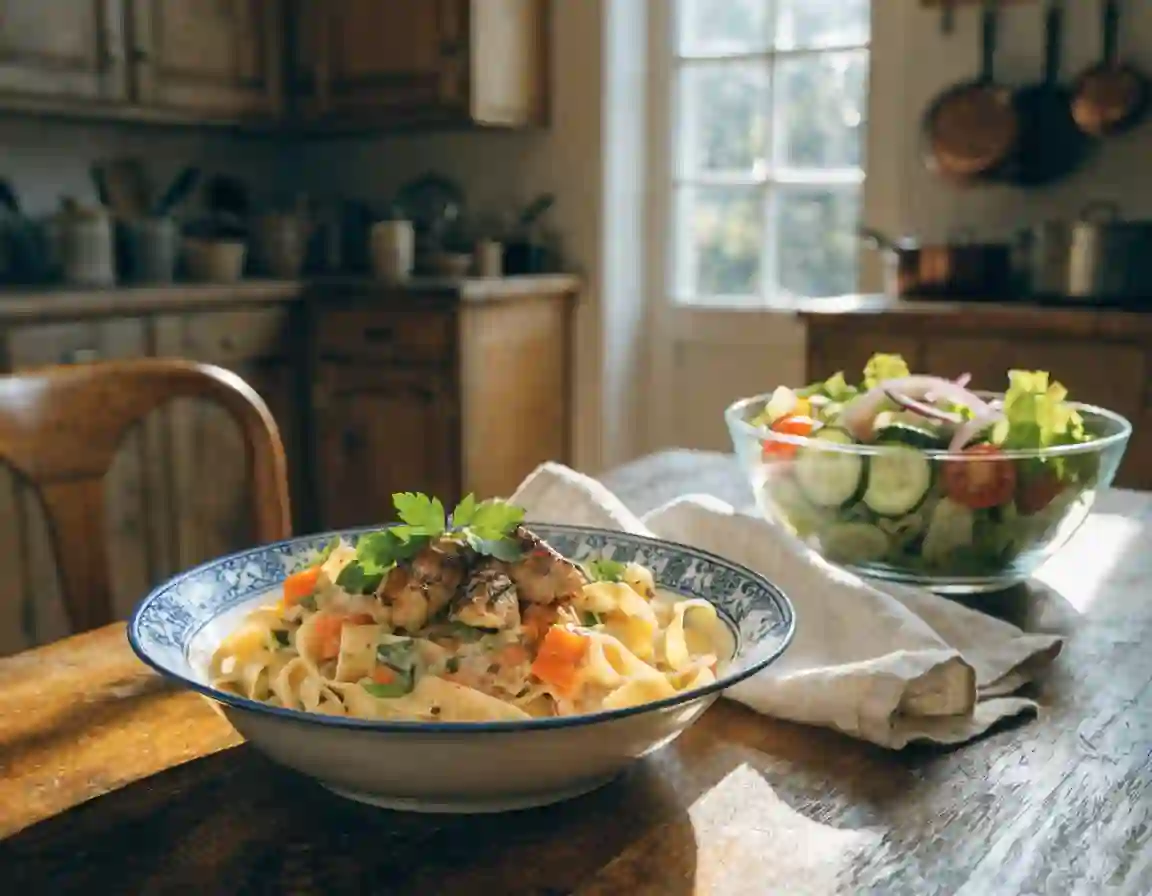
You ever sit down with a bowl of mac and cheese and tell yourself it’s just one serving.
And then somehow the bowl is empty.
And you’re not even sure you tasted it.
That’s the problem.
Comfort food is soft. Salty. Warm. It kind of disappears while you’re eating it. Pasta. Mashed potatoes. Pizza. It doesn’t fight back. You don’t have to chew much. You just keep going. And your brain is happy for about five minutes.
Then you’re full. But not satisfied. Which is annoying.
So yeah, figuring out how to make comfort food more filling without overeating isn’t about discipline. It’s more about… not letting the food win that easily. Because it will.
A lot of comfort food is basically quick carbs plus fat. That combo slides through your stomach fast. You feel good fast. You get hungry again fast. It’s almost impressive. Like it was designed that way.
And if you try to just “eat less” of it, that usually backfires. You take a smaller portion. You stare at it. You finish it. Then you go back for more because it didn’t really hit.
So the trick isn’t cutting it out. That never works long term. It’s changing it slightly so it actually fills you up. So one bowl feels like one bowl. Not a warm up round.
More volume. More protein. Slower eating without forcing yourself to eat slow. Stuff like that.
It sounds basic. It kind of is. But the way you combine things makes a bigger difference than most people think.
Anyway.
If you’ve ever finished comfort food and thought, “Why am I still kind of hungry?”
That’s what we’re getting into.
Why Comfort Food Is So Easy to Overeat
It’s not just you.
Some foods are just… easy. Too easy.
Mac and cheese. Garlic bread. Ice cream. You don’t really chew them. They sort of melt. You blink and half the plate’s gone. Your brain barely registers the effort.
That’s part of it. Effort.
Crunchy food slows you down. Steak makes you work. Even a big salad takes time. But comfort food? It’s soft. Warm. Predictable. You can eat it while scrolling and not miss much. That alone changes how much you eat.
And then there’s the way it’s built. Usually carbs plus fat. That combo hits fast. Blood sugar goes up. You feel good. Calm, even. Then it dips. And suddenly you want more. Not because you’re starving. Just because it feels unfinished.
It’s weird. You can be physically full but still kind of hunting for something.
I used to think that meant I had no control. Like I just liked food too much. But honestly some meals are designed to be low effort and high reward. Of course you go back for another scoop. There’s nothing in it slowing you down or stretching things out.
Soft Food Goes Down Fast
Soft texture matters more than people think.
Mashed potatoes versus roasted potatoes. Same ingredient. Totally different experience. One disappears. The other makes you chew. That chewing actually gives your body time to catch up. Signals need a minute. They’re not instant.
When everything on the plate is soft and calorie dense, there’s no pause. No friction. It’s just scoop, bite, swallow. Repeat.
You don’t even feel like you ate that much until it’s too late.
It Hits Your Brain Before It Fills Your Stomach
Comfort food also feels emotional. That sounds dramatic but it’s true. It’s tied to memories. Weekends. Being a kid. Stress relief. So when you eat it, you’re not just feeding hunger. You’re chasing that feeling.
And feelings don’t have clear portion sizes.
That’s why just saying “use smaller plates” doesn’t fix it. If the food doesn’t actually fill you up, you’ll just go back. Or snack later. Same result.
The goal isn’t to eat less comfort food. It’s to make it harder to overeat without feeling deprived.
There’s a difference.
Why am I still hungry after eating comfort food?
Usually because it was low in protein and fiber, and high in fast carbs. It digests quickly. Your stomach empties fast. Your blood sugar rises and falls. So even if you ate a lot of calories, you don’t stay full very long.
And then you blame yourself.
When really, the meal just wasn’t built to last.
How to Make Comfort Food More Filling Without Overeating
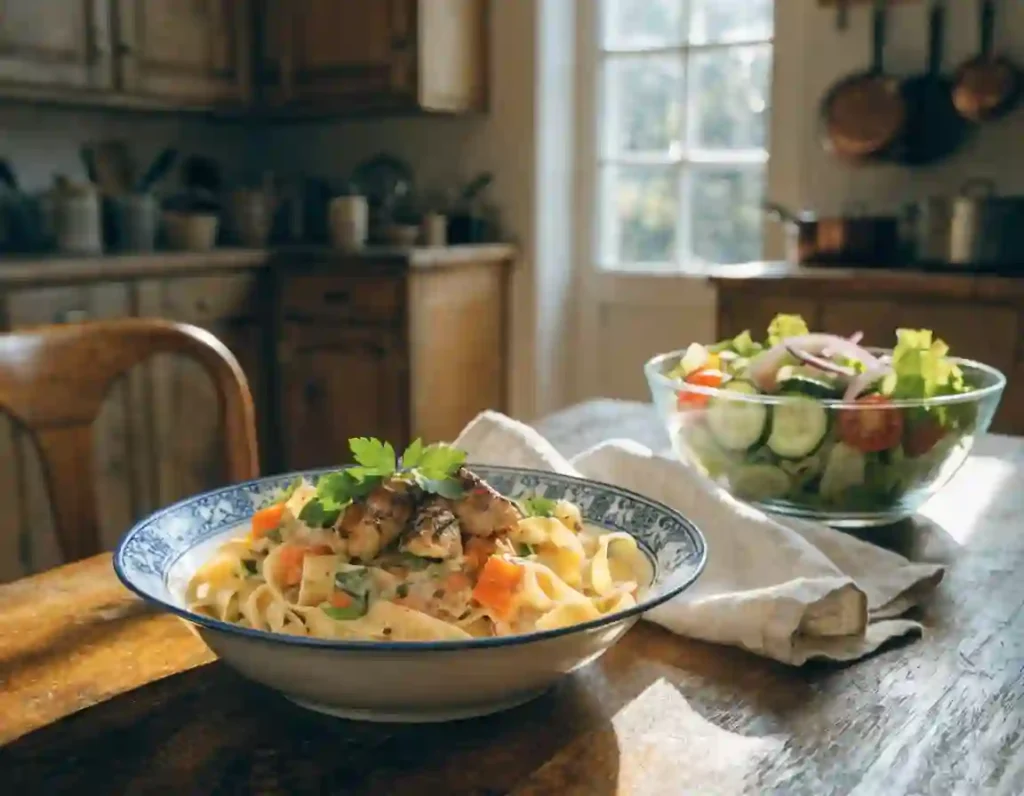
So here’s where it actually shifts.
Not by shrinking the portion. That just makes you irritated.
You finish it and immediately start thinking about what else is in the kitchen.
It’s more about changing the build of the meal. Slightly. Not turning mac and cheese into a salad. Nobody wants that.
Add Something That Slows It Down
Most comfort food is fast. Fast to chew. Fast to digest. Fast to get hungry again.
So you slow it down.
Protein helps. Not in a bodybuilder way. Just in a practical way. Mix cottage cheese into pasta sauce. Stir Greek yogurt into mashed potatoes. Add shredded chicken to that mac and cheese. Same vibe. Just sticks with you longer.
You don’t need a lot. Enough that your stomach has something solid to deal with.
And fiber. I know. Everyone says fiber. But it works. Throw spinach into lasagna. Add mushrooms to creamy pasta. Bulk it up without making the portion massive. It stretches the meal.
You’re still eating comfort food. It just doesn’t vanish in ten minutes.
Make It Take Effort
Texture matters more than people realize.
If everything on the plate is soft, you can inhale it. Try adding something with crunch. Roasted broccoli instead of steamed. Toasted breadcrumbs on top. Even a side salad that actually has bite.
It forces pauses.
And those pauses are where fullness starts catching up.
You don’t have to “eat mindfully.” Just make it physically harder to speed through.
Volume Without the Calorie Bomb
Another thing.
Sometimes you’re not craving more calories. You’re craving more food. The feeling of abundance.
So increase the volume. Zucchini noodles mixed into regular pasta. Cauliflower blended into cheese sauce. Extra veggies in casseroles. It makes the bowl look full. Heavy. Generous.
Your brain relaxes a bit when the plate looks big.
And weirdly, that helps you stop earlier.
Do I have to change the recipe completely?
No.
If it stops feeling like comfort food, you won’t stick with it. Small adjustments work better. Additions. Not replacements. Keep the flavor. Just change the balance so it actually fills you.
That’s usually enough.
How to Stop the “I’ll Just Have One More Bite” Thing
This part is less about the food.
More about that weird switch in your head.
You know the one.
You’re technically full. Not starving. But there’s still food on the plate. And it tastes good. And it feels like stopping would be… incomplete.
So you take another bite.
And then another.
It’s not hunger. It’s momentum.
Comfort food is good at building momentum. It’s smooth. No resistance. So there’s no natural stopping point. No bones to deal with. No shells to crack. Just scoop and repeat.
One thing that helps. Plate it once. Not in a strict way. Just physically put the rest away before you sit down. Because if it’s in front of you, you’ll eat it. Most people will. It’s not a flaw.
And sit down to eat it. Not on the couch. Not standing at the counter. When you hover, you don’t register how much you’ve had. You just keep going because you never really started.
Another thing. Give it ten minutes.
Not as a rule. Just a pause.
Finish the plate. Wait. Check in. Half the time the urge for more fades if you don’t immediately act on it. The first wave of fullness is delayed. It shows up late.
If after ten minutes you’re still actually hungry, fine. Have more. But make it intentional. Not automatic.
The “I Deserve This” Loop
This one’s subtle.
You’ve had a long day. You finally sit down with your food. It feels earned. So stopping early feels unfair. Like you’re cutting off your reward.
That’s where overeating sneaks in.
If you build the meal to actually fill you up, you don’t feel cheated when it ends. That’s the difference. It feels complete instead of interrupted.
Which sounds small. It’s not.
Is this just about willpower?
Not really.
If the meal digests fast and doesn’t satisfy you, you’re going to want more. That’s biology. Not weakness.
When comfort food is built with protein, fiber, some texture, enough volume, it changes the whole experience. You’re less likely to spiral into that automatic extra serving.
It’s quieter. Less dramatic.
Still tastes good. Just… ends normally.
Comfort Food Makeovers That Actually Keep You Full
Let’s make this less abstract.
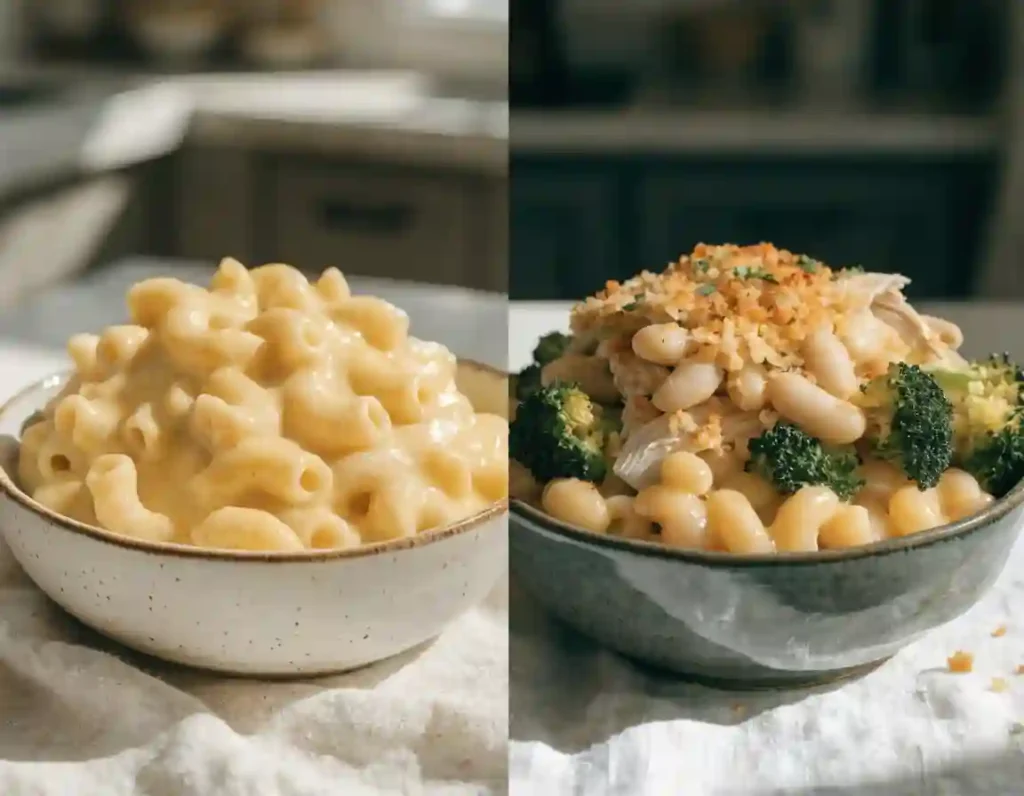
Take mac and cheese.
Normal version. Pasta. Cheese sauce. Maybe breadcrumbs if you’re fancy. It’s warm. Creamy. Gone in six minutes.
Now change almost nothing.
Use the same pasta, just a bit less of it. Mix in white beans. Or lentils. They disappear into the sauce if you don’t overthink it. Add shredded chicken or even just extra milk blended with cottage cheese. Suddenly it sticks longer. Same bowl. Different aftermath.
You’re not stuffed. You’re just… done.
Pizza’s another one.
Two slices can feel like nothing. Because it’s mostly refined crust and cheese. So add a side salad with real crunch. Or pile arugula on top of the slice itself. Add grilled chicken. Mushrooms. Something with substance.
You’re not replacing pizza. You’re anchoring it.
Pasta Alfredo.
Instead of a huge bowl of only pasta and cream sauce, cut the pasta slightly and add roasted broccoli, zucchini, peas. Bulk it up. Add protein. Keep the sauce. Keep the comfort. Just don’t let it be the only thing doing the work.
Same with mashed potatoes.
Mix in Greek yogurt. Add roasted garlic. Pair it with a solid protein and vegetables that actually take chewing. If the whole plate is beige and soft, you already know what’s going to happen.
Even dessert.
Ice cream alone disappears fast. Ice cream with berries and some chopped nuts? Different pace. Different ending.
None of this is dramatic. It’s subtle shifts.
You’re not turning comfort food into diet food. You’re just building it so it doesn’t evaporate in your stomach.
Do I have to measure everything?
No.
This isn’t about weighing pasta or tracking grams.
It’s more about looking at the plate and asking, “Is this going to last?” If it’s all soft carbs and fat, probably not. If there’s protein. Fiber. Some chew. It’s more likely to hold you.
You don’t need perfection. Just enough structure so the meal actually satisfies you.
The Part Nobody Talks About
Sometimes you overeat comfort food because you’re trying to get full from it emotionally.
Not physically.
You’re tired. Or bored. Or you finally stopped moving for the day and now everything catches up. And the food feels like a way to land. So you keep eating because you’re chasing that “okay, now I feel settled” feeling.
The problem is, carbs and fat alone don’t really create that settled feeling for long. They spike. They soothe. Then they fade. So you go back in.
And then you’re uncomfortable. Which is not what you wanted.
There’s also this quiet restriction mindset a lot of people carry. You tell yourself you shouldn’t be eating comfort food in the first place. So when you do, there’s this subtle rush. Like you better enjoy it while it lasts. Which makes you eat faster. And more.
It’s weird how that works.
If you stop treating comfort food like a rare event and just make it balanced enough to hold you, it loses some of that urgency. It becomes normal. And normal food doesn’t usually cause spirals.
Another thing.
Eat it when you’re actually hungry.
Not starving. Not already overfull from random snacks. Real hunger. Because when you wait too long and then hit comfort food, you don’t stand a chance. Your body wants energy fast. And that’s exactly what those foods give.
So maybe the move isn’t “how do I control myself around this.”
Maybe it’s “how do I build this meal so it does its job.”
And sometimes that job is comfort. That’s fine. Just let it also be filling.
Not perfect. Just filling enough that you can finish, lean back, and not immediately think about what else is in the fridge.
A Few Small Tweaks That Make a Big Difference
This isn’t complicated. It just feels like it should be.
One thing that helps more than people expect is eating something small before the comfort food. Not a full appetizer. Just something with protein or fiber. A boiled egg. A handful of carrots and hummus. Even a piece of fruit with some yogurt.
It takes the edge off.
So when you sit down to the main thing, you’re not in that urgent state. You’re calmer. You taste it more. You stop earlier without trying to.
Also. Don’t eat it straight out of the container.
That sounds obvious but it matters. When you eat from the pan or the box, there’s no visual cue. No clear start or finish. It blurs. You lose track. Put it on a plate. Even if it’s just for you.
And sit down.
Another quiet trick is temperature. If food is extremely hot, you slow down naturally. If it’s lukewarm, you eat faster. Same with super cold desserts that melt quickly. Slight friction changes pace.
And pace changes fullness.
You don’t need to count anything. You don’t need to swap everything. Just adjust the setup so the food works with you instead of against you.
It’s less about controlling yourself.
More about not setting yourself up to fail in the first place.
When It Finally Feels… Enough
There’s a point in a meal where it shifts.
Not stuffed. Not uncomfortable. Just… okay. Done.
Most people miss it.
Because they’re waiting for that heavy full feeling. The kind where you lean back and regret it a little. But comfort food doesn’t need to end that way to count.
If it has protein in it. If there’s fiber. If the portion looks generous enough. If you actually sat down and ate it instead of hovering over the stove. There’s a good chance you’ll hit that quiet “I’m good” moment earlier than you expect.
And it’s subtle.
It’s more like the food stops tasting as intense. The urgency fades. You’re not chasing the next bite anymore. That’s usually the cue.
Most of the time, overeating comfort food isn’t about greed or lack of discipline. It’s about the food being too easy and the body not getting what it needs from it.
Change the build a little. Add some resistance. Add some structure.
And suddenly one bowl feels like one bowl.
Not a preview.
Leave a Reply